

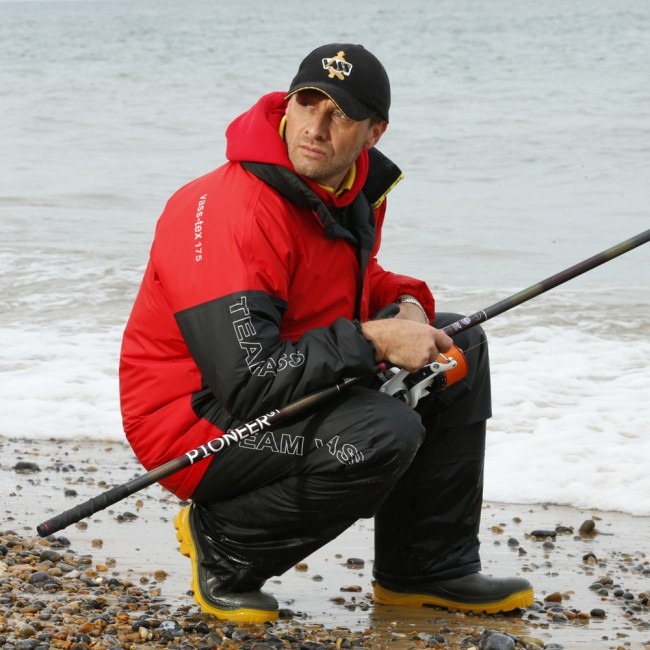
There is an old saying amongst seasoned anglers: “There is no such thing as bad weather, only inappropriate clothing.”
We have all been there. You’re three hours into a session, the skies open up, and suddenly that “water resistant” jacket you bought feels more like a wet sponge. You become cold, miserable, and your focus shifts from catching fish to just wanting to go home.
On the flip side, you might hike a mile to a remote swim in full waterproof bibs, only to arrive drenched in your own sweat because your gear couldn’t let the heat escape.
Modern fishing clothing technology is incredible, but the tags are covered in confusing numbers like 10k, 20,000mm, and MVTR. What do they mean, and why should you care?
This guide will break down exactly how waterproof and breathability ratings work, the technology behind them, and the trade-offs involved so you can choose the right gear for the way you fish.
Part 1: The Science of “Waterproof” (Keeping the Outside Out)
When a manufacturer claims a jacket, saloon, or set of waders is waterproof, they have to prove it using standardized tests. The most common metric you will see is the Hydrostatic Head (HH) rating, measured in millimeters (mm).
The Hydrostatic Head Test
Imagine taking a piece of the clothing fabric and clamping it over the bottom of a tall, open-ended tube. Now, imagine slowly filling that tube with water.
The Hydrostatic Head rating is simply the measurement of how tall that column of water gets (in millimeters) before the pressure forces water through the fabric to the other side.
If a jacket is rated 10,000mm, it means a column of water 10 meters tall sat on that fabric before it leaked. That sounds like a lot of water pressure, and it is.
Interpreting the Waterproof Numbers
While a 10-meter column of water seems abstract, it translates to real-world weather conditions.
0mm – 1,500mm (Water Resistant): Fine for a light misty drizzle while walking the dog. Not suitable for proper fishing.
1,500mm – 5,000mm (Showerproof): Will handle a light shower, but prolonged rain will eventually soak through.
5,000mm – 10,000mm (Waterproof): The entry level for serious fishing gear. Good for average rainy days.
10,000mm – 20,000mm (Highly Waterproof): This is the sweet spot for most dedicated anglers. It will handle heavy, driving rain for hours.
20,000mm+ (Extreme Waterproofing): Built for the worst conditions imaginable—torrential storms, high winds driving rain sideways, and sitting on wet boat benches all day.
Crucial Note on Pressure: Rain doesn’t just fall; it hits with force. Furthermore, when you kneel on wet ground or sit on a wet boat seat, you are exerting significant pressure on the fabric, potentially forcing water through. This is why serious fishing gear needs higher ratings (15k+) in areas like the seat and knees.
Part 2: The Science of “Breathability” (Letting the Inside Out)
If you wrapped yourself in a plastic bin bag, you would be 100% waterproof. You would also become soaked in sweat within minutes of moving. This is the “boil in the bag” effect.
Breathability is the fabric’s ability to allow moisture vapour (sweat) to escape from the inside, while still stopping water droplets from getting in from the outside.
Measuring this is harder than measuring waterproofing, and there are two main systems used.
1. The MVTR Test (Moisture Vapour Transmission Rate)
This is the most common rating seen on fishing gear tags. It measures how many grams of water vapour can pass through a square meter of the fabric in a 24-hour period (g/m²/24hrs).
The Rule: The higher the number, the more breathable the garment.
< 5,000g: Not very breathable. OK for sedentary bait fishing in cold weather.
5,000g – 10,000g: Moderate breathability. Fine for general bank fishing without too much walking.
10,000g – 20,000g: High breathability. Great for active fishing, stalking, or roving along a river.
20,000g+: Extreme breathability. Essential for high-exertion activities like hiking into remote mountain lakes or demanding wading.
2. The RET Test (Resistance to Evaporative Heat Transfer)
You see this less often, usually on very high-end technical outdoor gear (like Gore-Tex Pro).
The Rule: The lower the number, the more resistance the fabric has to letting steam out, and therefore the better it is.
RET 0-6: Extremely breathable.
RET 6-13: Good breathability.
RET 20+: Like wearing a plastic bag.
Part 3: The Technology (How it Works)
How can fabric stop a raindrop but let sweat out? It usually comes down to a three-part system.
1. The Membrane (The Engine Room)
Sandwiched between the durable outer fabric and the inner lining is a thin membrane. This membrane is microporous.
Imagine a microscopic colander. The holes are so small that a water droplet (which is quite large due to surface tension) cannot fit through. However, sweat vapour (which is a gas) is tiny individually and can pass right through the holes.
Famous examples include Gore-Tex, eVent, and various proprietary brand membranes.
2. The DWR Coating (The First Line of Defense)
This is vital. DWR stands for Durable Water Repellent. It is a chemical treatment applied to the outside of the jacket.
DWR does not make the jacket waterproof; it makes water “bead up” and roll off the surface.
Why is DWR crucial for breathability? If the DWR wears off, the outer face fabric of your jacket will soak up rain (this is called “wetting out”). If the outer layer is saturated with water, the sweat vapour from inside has nowhere to go—the doors are blocked. Your expensive breathable jacket suddenly isn’t breathable anymore.
Tip: When your jacket stops beading water, you need to wash it and re-apply a DWR treatment (like Nikwax).
3. Taped Seams
A waterproof fabric is useless if you punch thousands of holes in it with a sewing needle to make a jacket. True waterproof garments have “taped seams,” where a waterproof tape is heat-sealed over every stitch line inside the garment to prevent leaks.
Part 4: The Trade-Offs (Pros and Cons)
You might ask, “Why not just buy 30,000mm waterproof and 30,000g breathable gear for everything?”
The answer is cost, durability, and the inevitable trade-off between keeping water out and letting air move.
The Case for ULTRA-WATERPROOF (High HH, Lower Breathability)
Think heavy-duty PVC bibs or thick, heavy-wading jackets designed for boat fishing in Norway.
The Pros:
Bombproof Protection: You can sit in a puddle on a boat seat for 8 hours in driving sleet and stay dry.
Durability: Often made of thicker, heavier face fabrics that withstand thorns, rocky banks, and fish spines better.
Cost: Often cheaper to manufacture than highly technical membranes.
The Cons:
Sweat Management: If you have to hike a mile to your peg carrying tackle, you will sweat, and it won’t escape fast enough. You’ll get damp from the inside.
Stiffness/Weight: These garments can feel heavy and restrictive to cast in all day.
The Case for ULTRA-BREATHABLE (High MVTR, Moderate HH)
Think lightweight wading jackets for fly fishing or technical shell jackets for roving anglers.
The Pros:
Incredible Comfort: You can regulate your temperature much better during active fishing. You stay dry from your own sweat.
Lightweight: Easier to pack away and less fatiguing to wear for active casting.
The Cons:
“Wetting Out” Faster: In truly torrential, sustained downpours, the pressure can eventually overwhelm highly breathable membranes faster than their heavier counterparts.
Durability: To achieve high breathability, thinner face fabrics are often used, which may rip easier on brambles.
Cost: High-performance membranes are expensive.
Summary: Choosing Your Gear
When buying fishing clothing, ignore the marketing hype and look for the numbers on the tag.
For the sedentary bait angler (sitting under an umbrella or bivvy most of the time): Prioritize a high Waterproof rating (15k+). Breathability is less critical because you aren’t moving much.
For the roving lure angler or fly fisher (constant walking, wading, casting): Prioritize a high Breathability rating (15k+ MVTR). A 10k waterproof rating might be enough if you are active enough to generate heat to push sweat out.
For the boat angler: You need maximum waterproofing, especially in the seat of bibs and trousers, to handle the pressure of sitting on wet surfaces.
Understanding these ratings ensures that the next time the weather turns, you’ll be the one still fishing comfortably while others are heading for the car.