Heavy-Duty Norway Jigs & Halibut Pirks: Tackle for Monster Cod and Deep Fjords
Welcome to the definitive collection of deep-sea tackle engineered exclusively for the unforgiving environment of the Norwegian coast. Success in these northern waters—whether drifting over the spectacular fishing grounds of the Lofoten Islands or battling currents in locations like Saltstraumen—demands tackle that is technically superior and fundamentally cannot fail. The selection at Gerry’s Fishing has been rigorously chosen and proven to meet the extraordinary challenge posed by trophy species, including world-class Atlantic Cod, colossal Halibut (kveite), and powerful Saithe (Coalfish).
The unique complexity of Norwegian angling lies in the combination of extreme depth and powerful tidal flow. Anglers are often required to fish well beyond 100 meters, frequently targeting depths between 200 and 400 meters, and sometimes even reaching 600 meters. To maintain a vertical lure presentation and ensure direct contact with the seabed in such conditions, the required lure weights are far greater than those used in standard European sea fishing. This category focuses on specialist jigs and pirks in weights ranging from 250g up to colossal 750g models. This massive weight class is essential for overcoming drag from the line in heavy currents, guaranteeing that the lure reaches the strike zone quickly and maintains the desired action.
The Non-Negotiable Requirement for High-Integrity Tackle
The extreme demands placed on terminal gear in this environment mean that component failure is simply not acceptable. Big Norwegian Cod and Halibut exert immense pressure, testing every knot, split ring, and hook. The best practices emphasize purchasing the highest quality gear possible, recognizing that durable, high-spec equipment lasts longer and withstands the extreme conditions where lighter tackle would break down. Gerry’s selection prioritizes integrity, addressing the need for items that are workhorses and specifically built to last in aggressive, saltwater environments. This principle extends through all components, from heavy leaders designed to resist abrasion on rocky structure to hooks engineered to hold a substantial fish in deep water.
Specialized Jigs for Norway’s Giants: Cod, Halibut, and Saithe
Successful jigging in Norway requires a versatile lure arsenal adapted to depth, species, and current. The primary lure types fall into three categories: traditional pirks, heavy vertical jigs, and soft plastic shads.
Deep Dive: Heavy Pirks and Vertical Jigs (300g and Up)
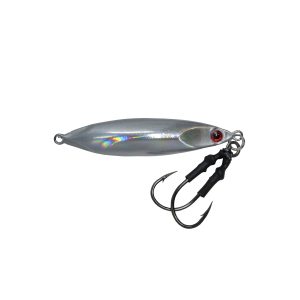
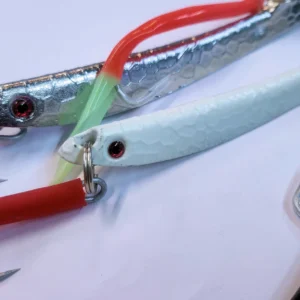
The traditional Chrome Pirk remains one of the most famous and reliable lures in Norway, synonymous with Cod and Halibut fishing. These weighted metallic lures often feature a banana shape that proves highly effective.6 The flash and vibration generated by the metallic surface are crucial attractants in deep, dark or murky water.
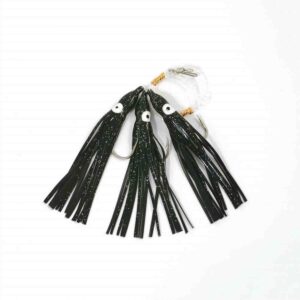
For targeting the truly monstrous Cod, Soft Plastic Shads paired with heavy jig heads are indispensable. These lures are frequently large, often measuring 10 to 15 inches long and rigged onto jig heads weighing from 250g to 500g This size is purposeful: a larger lure targets the largest fish, as a giant cod perceives it as a necessary, high-calorie meal, while smaller fish tend to ignore it. The vertical jigging motion employed with these heavy lures is highly effective for deep-sea fishing, ensuring the bait reaches the required depths quickly.
The Nuance of Slow Pitch Jigging vs. Speed Jigging
The Norwegian deep-sea environment dictates subtle shifts in technique compared to tropical jigging.
Slow Jigging for Halibut and Cod: Slow jigging is an increasingly recognized technique for larger, slower-moving fish like Halibut and large Cod. The method utilizes jigs specifically designed for a wide, attractive “flutter” or “falling blade” action (e.g., FCL Labo SL Jig, Savage Gear Slow Seeker). In the cold northern waters, the fish’s metabolism is slower, meaning that fast, erratic movements are often less effective. A slower, more deliberate, fluttering presentation—mimicking a wounded baitfish—is frequently deadly.
Speed Jigging for Saithe (Coalfish): The aggressive Coalfish (Saithe) is a notable exception and responds exceptionally well to Speed Jigging. For this technique, longer, slimmer, fast-fall jigs are preferred, as they reach the bottom quickly in strong currents and can be retrieved rapidly, triggering a reaction strike from these fast-moving predators.
Color Strategy for Deep Water Visibility
Choosing the right color is directly correlated with water conditions and depth. In the dark fjords, where sunlight penetration is minimal, high-visibility colors are essential for lure attraction.
The prevalence of bright colors like Fluoro Pink and Orange for deep water is validated by commercial product availability and angler success. For example, proven Halibut and Cod lures often utilize these high-vis color schemes or feature anti-chip coatings in Lumi Pink or Lumi Green, specifically to capitalize on low-light visibility.
Uncompromising Terminal Tackle for Deep-Sea Success
The quality of the jig or pirk is only as good as the terminal tackle connecting it to the line. In Norway, where the average fish size is substantially larger and the environment is highly abrasive, upgrading factory-supplied components is mandatory.
Essential Hook Upgrades: Strength is Non-Negotiable
Many mass-market pirks are supplied with hooks and split rings that are simply inadequate for heavy use. Replacing these inferior components with high-standard trebles or heavy singles is essential for securing large fish.
Treble Hook Specifications: For traditional pirks and soft shads, premium, heavy-wire trebles are required. The Gerry’s brozne trebles in sizes 3/0 and $4/0$ is a popular choice, recognized for maintaining sharpness, resisting rust, and providing superior hook hold—all critical features when fishing in corrosive saltwater environments. While much larger trebles 10/0 to 12/0 were historically used, modern catch-and-release practices favor the smaller, super-strong 4X options that cause less damage to the fish.6
Single and Circle Hooks for Halibut: When targeting large Halibut, especially with dead bait or large soft shads, strong single or circle hooks are preferred. Extremely strong, wide-gape singles (size 8/0 to $12/0 from manufacturers like Trokar, Gamakatsu, or Big Dog II are ideal.
A crucial rigging detail for single hooks is the use of a Loop Knot (or a Loop Knot version of the Big Game Knot for circle hooks). This allows the hook to pivot freely, which results in significantly more hook-ups as the hook can turn easily into the fish’s jaw during the strike. Furthermore, when fishing with soft shads, incorporating a heavy-duty stinger hook that nicks into the wrist of the tail, rigged on 150-200g mono leader material, provides a secondary, reliable connection point for trophy fish.6
Leader Material and Rigging Requirements
The line connecting the main braid to the lure must withstand abrasion from the rocky bottom structure and the immense pressure of the fight.
Leader Integrity: Anglers must use high-test fluorocarbon or mono leaders, typically ranging from 100-150lb breaking strain. A leader length of approximately one meter (around three feet) is considered ideal. This length facilitates landing the fish safely near the boat, as a longer leader could mean the fish is still several feet away when the swivel reaches the rod tip.6 These heavy leaders are securely attached to the braided mainline using strong knots proven to join dissimilar lines, such as the Double Uni Knot or the Albright Knot.
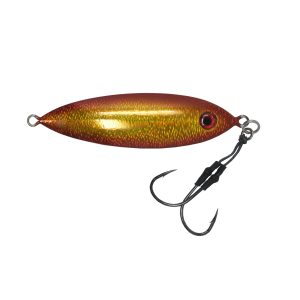
Jig Rigging: For optimal performance with jigs, particularly during slow jigging, a strong double assist hook rigged at the top of the jig is the best setup, maximizing the chance of a solid hook-up. The use of robust swivels, often rated at 250g breaking strain or more, coupled with stainless steel split rings, is deemed the strongest method for connecting the lure to the leader, avoiding reliance on snap links that may fail under the extreme strain of a large Halibut
Optimal Jig Weight Guide for Norway Deep Water
The fundamental challenge of Norway fishing is maintaining a vertical presentation. If the current is too strong or the jig is too light, the lure drifts off-angle, reducing control, diminishing the lure’s action, and minimizing the chance of a bite. A widely accepted rule for jigging is the 1g per foot of depth rule (approximately 3g per meter) as a starting point under light current. This table illustrates the necessary weight escalation based on the severity of the Norwegian environment:
Optimal Jig Weight Guide for Norway Deep Water
| Depth Range (Metres) |
Equivalent (Feet) |
Recommended Starting Weight (Light Current) |
Heavy Current Adjustment (+50% to +100%) |
Target Species & Technique |
| 10m – 30m |
30 – 100 ft |
80-150g |
125-200g |
Pollack, Saithe, Light Jigging/Casting
|
| 30m – 90m |
100 – 300 ft |
150-300g |
225-600g |
Cod, Haddock, Medium Vertical Jigging
|
| 90m – 180m+ |
300 – 600 ft+ |
350-600g |
Use 500-750g Pirks/Leads |
Halibut, Monster Cod, Ling, Deep-Sea Bait Fishing
|
Lure Shape and Action
Jig shape is almost as important as weight, particularly when adjusting to fish aggression levels.
-
Fast Current / Aggressive Fish (Saithe): Narrow, dense jigs (e.g., Javelin type) are ideal, offering a quick drop and a tight flutter, which minimizes drag and is preferred when the current is strong.
-
Light Current / Finicky Bite (Halibut/Cod): Wide, center-weighted jigs are better in lighter currents, as they hang and flutter in the strike zone longer, maximizing exposure to less aggressive predators.
-
Deep Water: The Samurai Heavyweight Jig or similar through-wire tough designs (up to 600g) are engineered to reach the bottom quickly in the deepest areas, confirming that structure-specific design is crucial for successful penetration of the water column.
Frequently Asked Questions (FAQs) for Norway Jigs & Pirks
Q1: How do I choose the correct jig weight for the depth and current in Norway?
Determining the correct jig weight is dependent on maintaining a vertical drop in deep water, which is achieved by minimizing the line drag from current and depth. As a rule of thumb, use roughly 3g of weight for every meter of depth as a starting point. If the boat is drifting or the tidal current is strong (which is common in areas like Saltstraumen), the weight must be dramatically increased—sometimes 50 – 100 to ensure the lure doesn’t angle too far away from the boat. For extreme depths exceeding 100m, anglers should be prepared to deploy jig weights or pirks ranging from 350g to over 750g to guarantee seabed contact and effective lure action.
Q2: Should I replace the standard hooks on my new pirks and shads before fishing in Norway?
It is a widely accepted, and strongly recommended, practice to replace the standard treble hooks and split rings on most mass-produced jigs and pirks. The component quality often supplied with standard lures is often insufficient to handle the intense pressures and powerful, protracted runs of large Norwegian Cod and Halibut. Anglers should replace these with highly-rated, strong components. Recommended upgrades include Treble hooks in sizes 3/0 to 4/0 (such as the Gerrys Brozne Trebles), and for large soft shads, upgrading the molded single hook and adding a heavy-duty stinger is essential.
Q3: What specific colors are best for Halibut and Cod fishing in deep fjords?
Color selection in Norway is primarily about visibility in dark, deep water. For deep-sea vertical jigging where light penetration is poor, high-visibility colors are indispensable. This includes Fluoro Pink, Fluoro Orange, and luminous Glow/Lumi options.These colors contrast sharply or mimic bioluminescence, which is highly effective for attracting predators lurking in the deep abyss. Conversely, when fishing in shallower or very clear water, or on bright, sunny days, more natural patterns—such as silver, blue sparkle, or realistic baitfish imitations—are highly effective.
Q4: What size and type of single hooks are best for Halibut dead bait rigs?
For Halibut rigs, the focus must be on strength and safety for potential catch-and-release scenarios. The ideal hook choice includes extremely strong, wide-gape single or specialized circle hooks, typically in sizes $8/0$ to 12/0. The Circle Hook Rig is particularly advantageous for catch and release because it consistently hooks the fish in the jaw, leading to reduced mortality. Regardless of the hook type chosen, it must always be attached to the trace using a Loop Knot. This knot ensures the hook can move freely and turn into the fish’s mouth when tension is applied, significantly increasing the reliability of the hook-set.
Q5: Why is using braided line (multifilament) essential for Norway deep-sea jigging?
Braided line (or multifilament line) is considered the only suitable choice for deep-sea fishing in Norway due to its fundamental physical properties. First, it has virtually no stretch, providing unparalleled sensitivity. This allows the angler to feel every subtle knock or bite, even when fishing in hundreds of feet of water. Second, braided line is significantly thinner than monofilament for the same breaking strain . This reduced diameter is crucial because it cuts down on the drag created by the strong currents, allowing the angler to use lighter jigs while still achieving a vertical presentation and maintaining contact with the bottom.
Q6: What is the recommended leader setup for jigs and pirks in Norway?
The recommended leader setup involves using a robust, high-breaking strain mono or fluorocarbon leader, typically between 100lb and 150lbThis heavy material provides necessary abrasion resistance against rocks and ledges.4 The leader should be connected to the braided mainline using an exceptionally strong connection knot, such as the Double Uni Knot or the Albright Knot, as this joint is a high-stress point. A short leader length—around one meter—is preferred because it keeps the fish closer to the angler when the connection swivel reaches the rod tip, facilitating safer and easier landing, especially of large specimens. For soft plastic shads, the heavy-duty stinger hook should be attached using 150-200lb mono to prevent bite-offs from larger predators.