



Your payments are secure with our private security network.
Your orders are shipped seamlessly between countries.
We are happy to take returns for new items for up to 30 days.
Expert advice on all types of fishing situations & tackle.
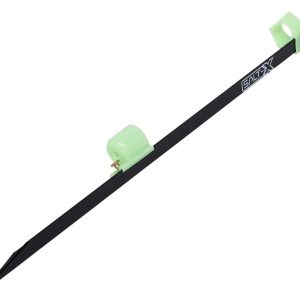
Sand spikes are the simplest, most reliable rod support for beach and shore anglers: lightweight, quick to deploy and ideal for keeping rod tips clear of breaking waves while you bait up, land fish or run multiple rods. At Gerry’s Fishing we stock a wide range of sand spikes and beach rod supports built for durability, stability and easy transport so you can fish longer, safer and with less fuss.
Why use a sand spike on the beach
A properly chosen sand spike gives you:
Key features to look for
Types of sand spikes and when to use them
How to choose the right sand spike
Setup and use tips
Maintenance and care
Q: What length sand spike should I buy for beachcasting?
A: For most beachcasting situations choose a spike between 1.2 m and 1.8 m — long enough to clear breaking waves but still portable. For very exposed marks or high tide work consider 1.8–2.0 m.
Q: Are twin‑leg spikes better than single‑shaft spikes?
A: Twin‑leg or forked spikes provide greater lateral stability in wind and on soft sand, making them a better choice for heavy rods or exposed beaches; single‑shaft spikes are lighter and easier to carry.
Q: Can I use a sand spike on shingle or rock?
A: Sand spikes are optimised for sand. On shingle or rock use a bankstick, tripod or weighted rod rest designed for hard ground to avoid damage and instability.
Q: How do I stop a spike from pulling out during a big run?
A: Drive the spike deeper, use a wider‑foot or twin‑leg model, angle the rod down slightly, and consider staking or weighting the base if conditions are extreme.
Q: Do sand spikes rust quickly?
A: Cheap, untreated metal spikes can corrode. Choose anodised aluminium, stainless steel or composite spikes and rinse them in fresh water after each session to prolong life.
Q: Can I attach bite alarms to sand spikes?
A: Many spikes have heads or adaptors that accept bite alarms, bobbins or rod clamps; check product specs for compatibility.