Your payments are secure with our private security network.
Your orders are shipped seamlessly between countries.
We are happy to take returns for new items for up to 30 days.
Expert advice on all types of fishing situations & tackle.
Your bite alarms are among the most technologically advanced and expensive items in your tackle bag. From high-precision roller wheels to sensitive vibration sensors and delicate LED displays, these devices are built for performance—but they are also vulnerable to damage during transport. A dedicated Bite Alarm Case is a small investment that provides a massive amount of protection, ensuring your gear remains in perfect working order session after session.
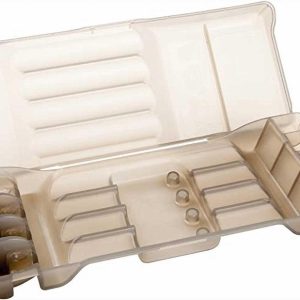
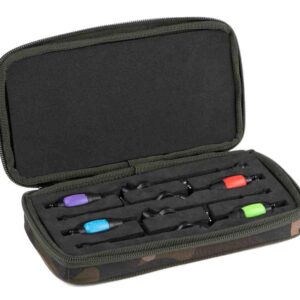
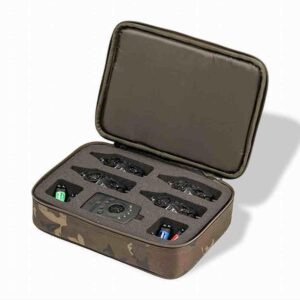
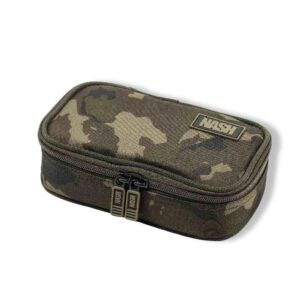
At Gerry’s Fishing, we stock everything from individual neoprene “skins” to heavy-duty, foam-lined presentation cases. Whether you want to keep your alarms mounted on your buzz bars or store them safely in a dedicated carryall, our range offers the ultimate shield against impact, moisture, and dust.
Choosing the right case depends on how you transport your setup. Below is a breakdown of the most common protection systems available.
| Feature | Neoprene Individual Covers | EVA Molded Hard Cases | Foam-Lined Presentation Sets |
| Material | High-Stretch 4mm Neoprene | Semi-Rigid EVA Polymer | Reinforced ABS / Hard Plastic |
| Inner Lining | Soft-Touch Fabric | Padded Tricot | Custom-Cut High-Density Foam |
| Best For | Alarms kept on Buzz Bars | Mobile anglers / Single Alarms | Full 3 or 4 Rod Alarm Sets |
| Impact Rating | Moderate (Scratches/Dings) | High (Crushing/Drops) | Extreme (Maximum Shielding) |
| Water Resistance | Splash-Proof | Water-Resistant Zips | Waterproof / Gasket Sealed |
| Accessibility | Quick-Slide / Velcro | Secure Zip Closure | Heavy-Duty Latches |
Pro Tip: The “Moisture Trap” Warning
One of the biggest causes of alarm failure isn’t impact; it’s internal corrosion. After a rainy session, many anglers slide their wet alarms straight into a neoprene cover or a sealed hard case and leave them there until the next trip. This traps moisture against the electronics. Always remove your alarms from their cases when you get home, wipe them down, and let them air dry in a warm room for 24 hours before sealing them back in their protective cases. This simple step can double the lifespan of your electronics.
The “Ready-to-Go” Setup: If you prefer to keep your alarms attached to your buzz bars for speed, neoprene covers are essential. They slide over the alarm head while it’s still screwed in, protecting the delicate toggle switches and roller wheels from being knocked or snapped inside your rod holdall.
Long-Distance Travel: If you are heading on a continental trip where gear is being stacked in a van or trailer, a hard-shell presentation case is a must. The custom-cut foam inserts keep the alarms and the receiver separated, preventing them from rubbing together and ensuring they don’t move even if the case is dropped.
Minimalist Roaming: For the river angler or the mobile “stalker,” a small EVA molded pouch provides enough protection to throw a single alarm into a rucksack or jacket pocket without worrying about the line-guides getting bent or the casing getting scratched by spare leads or tools.
Q: Will a universal case fit my specific brand of alarm?
A: Most neoprene covers are designed with enough “stretch” to fit 90% of alarms on the market, including larger models like Delkims or Fox Microns. However, for the best fit, look for cases specifically sized for your model. Presentation cases often come with “pluck foam” or universal slots that can be adjusted to fit almost any head.
Q: Do I need to remove the batteries when storing alarms in a case?
A: For short-term storage (between weekly sessions), it is fine to leave them in. For long-term storage (over winter), we recommend removing the batteries. Even inside a protective case, battery leakage can occur over time, which can destroy the internal circuit board of the alarm.
Q: Can I wash my neoprene alarm covers?
A: Yes. Neoprene covers can pick up mud and fish slime quite easily. You can hand-wash them in warm, soapy water. Always ensure they are 100% bone-dry before putting them back onto your alarms.
Q: What is the benefit of a “Receiver” slot in a case?
A: Most presentation cases feature a dedicated cutout for your wireless receiver. This is critical because the antenna on a receiver is often the most fragile part of the system. A dedicated slot prevents the antenna from being bent or snapped under the weight of the alarms.
If you have a specific alarm model and want to know which hard case or neoprene cover offers the most snug fit, I can look up the internal dimensions for you. Do you want me to do that?