





Your payments are secure with our private security network.
Your orders are shipped seamlessly between countries.
We are happy to take returns for new items for up to 30 days.
Expert advice on all types of fishing situations & tackle.
Here is a comprehensive category guide for your fishing wellies page. It is structured to help your customers understand the difference between standard yard boots and dedicated angling footwear, followed by the detailed product breakdowns tailored for your site.
Ask any seasoned angler what the quickest way to ruin a fishing trip is, and they will all give you the same answer: cold, wet feet. When you are standing on the freezing shingle of the local beaches, sinking into the famous Morecambe Bay mud, or waiting out a frost on a winter syndicate lake, a standard pair of thin, unlined garden wellies simply will not cut it.
Dedicated fishing wellies are engineered to be your first line of defense against the elements. They offer thick thermal insulation, heavy-duty soles designed to grip treacherous surfaces, and reinforced materials that won’t split the first time you drag them across a rocky gully.
Here is what you need to consider before stepping into your next pair:
Neoprene: The ultimate choice for winter anglers. Neoprene (often 4mm to 8.5mm thick) acts like a wetsuit for your feet, trapping your body heat and providing incredible insulation even in sub-zero temperatures. They are softer, more flexible, and incredibly comfortable for long walks along the coast or river.
Traditional Rubber/PVC: Brilliant for warmer months, deep mud, or boat fishing. They wipe clean instantly and are 100% waterproof. If you opt for rubber in the winter, ensure they are oversized enough to accommodate two pairs of heavy thermal socks or a dedicated fleece liner.
Deep Cleated/Tractor Soles: Essential for steep, muddy riverbanks, wet grass, and thick estuary mud. They dig in deep to stop you from sliding backward.
Studded Soles: A must-have for the hardcore sea angler. Tungsten or steel studs cut through slippery green weed and grip wet rocks, keeping you upright on the most dangerous rock marks.
Flat/Razor-Siped Soles: The go-to for boat anglers. They won’t mark fiberglass decks and actively channel water away to prevent slipping on flat, wet surfaces.
Always consider sizing up. A boot that fits perfectly with thin summer socks will restrict blood flow when you put on heavy winter thermals. Restricted blood flow leads to freezing toes, no matter how good the boot is.
To help you conquer the bank, beach, or boat, here are two of our top-tier recommendations that cover the most demanding angling scenarios.
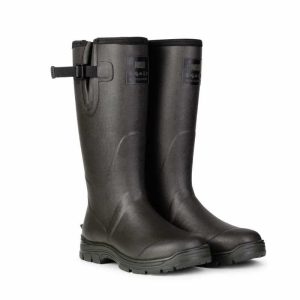
Product Name: Vass Fleece Lined Boot with Velcro Strap
Product Description: The Vass Fleece Lined Boot is an absolute staple among UK sea and carp anglers. Famous for its chunky, utilitarian build, this boot features a deep, thick synthetic fleece lining that delivers exceptional warmth without the premium price tag of a full neoprene boot. The defining feature is the quick-release Velcro calf strap. This wider calf fit allows you to easily tuck in heavy winter waterproof trousers (like your bib and brace) and secure them tightly to stop drafts, while also making the boots incredibly easy to slip on and off when jumping out of a bivvy.
Uses:
Winter Beach Fishing: The thick sole and warm lining insulate your feet from the freezing sand and shingle during long winter cod sessions.
Carp & Specimen Angling: The “slip-on” nature makes them the perfect boot to leave at the door of your shelter for quick night-time runs to the rods.
Everyday Bankside Use: Highly durable and easy to wash down after a session in deep mud.
Specifications:
Material: Heavy-duty, flexible PVC outer shell
Lining: Fixed, thick synthetic fleece thermal lining
Fastening: Adjustable wide Velcro calf strap
Sole: Deep-cut, chunky cleated sole for maximum grip in mud and sand
Fit: Wide calf design (ideal for tucking in waterproofs)
Care: 100% waterproof outer, easy wipe-clean surface
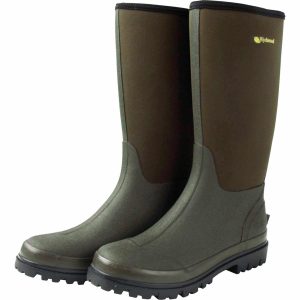
Product Name: Grubs Snowline 8.5 Neoprene Wellington
Product Description: When the temperature drops below zero and you are facing the harshest winter conditions, the Grubs Snowline 8.5 is the ultimate footwear upgrade. Engineered with a massive 8.5mm insulating layer (combining 5mm of neoprene with a high-loft fleece lining), these boots are comfort-rated down to an astonishing -40°C. They feature a highly advanced Vibram sole unit that provides phenomenal shock absorption and multi-directional grip. The lower portion of the boot is reinforced with a tough natural rubber shell, protecting the neoprene from sharp rocks, brambles, and submerged snags.
Uses:
Extreme Cold Weather: The definitive choice for freezing winter days, static piking, or sitting on an exposed pier for hours on end.
Roving & Walking: The athletic Vibram sole and shock-absorbing footbed make them incredibly comfortable for walking miles along rivers or vast stretches of coastline.
Rough Terrain: The reinforced rubber lower protects your feet against hidden rock edges and heavy coastal debris.
Specifications:
Material: 8.5mm INSU-FOAM ULTRA™ Neoprene upper with a natural rubber lower shell
Lining: Highloft moisture-wicking fleece lining for internal temperature regulation
Sole: High-performance Vibram® multi-sport outsole with shock-absorbing DURALITE™ midsole
Temperature Rating: Comfort rated from 10°C down to -40°C
Waterproofing: 100% waterproof from toe to top
Toe/Heel: Reinforced toe bumper and kick-off heel spur
Investing in a quality pair of fishing boots is just the first step. To ensure they survive multiple seasons of heavy mud, saltwater, and freezing temperatures, a little basic maintenance goes a long way.
1. Wash Off the Salt and Slime
Whether you have been sinking into thick estuarine mud or wading in the coastal surf, always rinse your boots with fresh water after a session. Saltwater is highly corrosive and will rapidly degrade both natural rubber and PVC if left to dry on the surface.
2. Dry Them Naturally (Avoid the Radiator!)
This is the number one cause of premature boot failure. Never force-dry your wellies by placing them directly on a hot radiator or in a high-heat airing cupboard. Direct heat bakes the materials, causing the rubber to crack, split, and shrink, and it can melt the glue holding the soles together. Instead, leave them to dry in a well-ventilated room at a normal temperature.
3. Tackle Internal Dampness
If the insides of your boots get wet from sweat or a stray wave, stuff them tightly with crumpled newspaper. The paper will safely draw the moisture out of the fleece or neoprene lining overnight. Swap the paper out the next morning if the boots are still damp.
4. Store Upright in the Dark
Prolonged UV light is rubber’s worst enemy. Leaving your wellies outside in the sun or baking in the back of a hot car will perish the materials and cause them to become brittle. Store them upright in a cool, dark garage or tackle shed. If the tops of the boots flop over, it can cause heavy creases that eventually split—use rolled-up magazines or dedicated boot trees inside the legs to keep them standing tall.
5. Condition the Rubber
For natural rubber boots, treating them a few times a season with a dedicated rubber conditioner or silicone spray makes a massive difference. This feeds the rubber, keeping it supple, restoring its flex, and preventing the material from drying out and cracking over the summer months.