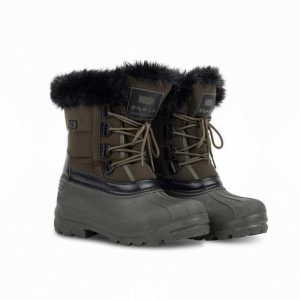
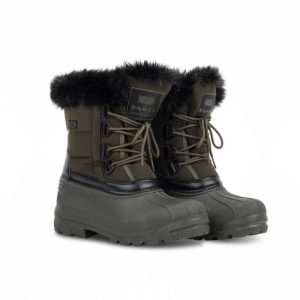
Welcome to the Gerry’s Fishing ultimate guide to fishing boots. Based in Morecambe, we’ve spent over 40 years helping anglers tackle the toughest terrains in the UK. Whether you’re standing in the sub-zero surf of the Cumbrian coast or navigating a slippery clay bank on a winter pike session, your feet are your foundation.
At Gerry’s, we believe “Anglers Serving Anglers” means providing gear that actually works. A wet, cold foot can end a session faster than a snapped tip. In this guide, we’ll break down everything you need to know about modern fishing footwear.
Why Buy Dedicated Fishing Boots?
Many beginners ask, “Why can’t I just use my hiking boots?” While hiking boots are great for dry trails, they aren’t designed for the constant immersion, salt corrosion, and thick mud typical of the UK angling scene.
Dedicated fishing boots are engineered for:
-
Corrosion Resistance: Saltwater eats away at the eyelets and glues of standard boots. Fishing boots use rust-proof materials.
-
Specific Grip: From “Mega Studded” soles for mossy rocks to cleated patterns for deep mud.
-
Static Warmth: Unlike hiking, where you are constantly moving, fishing involves a lot of standing still. Fishing boots prioritize thermal insulation for static positions.
Types of Fishing Footwear
1. Traditional Wellies & Rubber Boots
The staple of the British angler. Modern wellies have evolved far beyond the thin green rubber of the past.
-
PVC/Vass-Tex: Brands like Vass have revolutionized this category with boots that are flexible even in freezing temperatures.
-
Neoprene Lined: These offer incredible warmth by trapping a layer of air around your foot.
-
Best For: General beach fishing, muddy lake banks, and boat decks.
2. Winter & Field Boots
When the temperature drops below zero, you need a “Field Boot.” These are usually heavier and feature multi-layer insulation.
-
Thermal Liners: Often removable so they can be washed or dried quickly.
-
Height: Usually shorter than a welly but with more ankle support for trekking.
-
Best For: Overnight carp sessions, winter pike fishing, and long walks to remote marks.
3. Wading Boots (Stockingfoot)
These are not waterproof on their own. They are designed to be worn over the neoprene socks of “stockingfoot” waders.
-
Drainage: They feature ports to let water out so you aren’t lifting extra weight with every step.
-
Stability: They offer the highest level of ankle support, vital when walking over uneven riverbeds or submerged rocks.
-
Best For: Fly fishing, river wading, and mobile lure anglers.
4. Rockhopper & Specialist Boots
The “special forces” of fishing footwear. These are designed for the most dangerous terrain an angler can face: seaweed-covered rocks.
-
Spiked Soles: Often featuring tungsten or hardened steel spikes.
-
Felt Soles: Excellent for grip on smooth, slimy rocks (though they require more maintenance).
Technical Specifications: Soles, Lining, and Materials
When you message us about a product, we look at these key specs to ensure the boot matches your fishing style.
Sole Types
-
Cleated Sole: Large, deep “lugs.” Ideal for soft ground, mud, and grass.
-
Studded/Spiked Sole: Features metal studs embedded in the rubber. Essential for rock hopping and wooden piers.
-
Felt Sole: Best for underwater traction on slippery river stones.
Insulation (Thermal Ratings)
-
Fleece Lined: Good for autumn and spring; breathable but warm.
-
Neoprene (3mm – 6mm): The thicker the neoprene, the warmer the boot. 6mm is standard for “extreme” winter boots.
-
Fixed vs. Removable: Removable liners are easier to dry, but fixed liners often provide a more “snug” and stable fit.
Featured Product Specifications
At Gerry’s Fishing, we carry a massive inventory. Here are the specifications for some of our top-rated boots:
Vass Winter E Boot (Studded)
-
Material: High-quality PVC with a flexible synthetic rubber sole.
-
Lining: Fixed heavy-duty winter fur lining.
-
Sole: Deep cleated with integrated “Mega Studs” for maximum grip on rocks.
-
Features: Wider fit for thick socks and a “ladder-grip” on the bridge for climbing.
-
Best Use: The ultimate sea fishing boot for the UK’s rugged coastlines.
Preston Innovations Hydrotech Wellie
-
Material: 100% Waterproof Rubber.
-
Lining: Neoprene insulated for cold-weather comfort.
-
Sole: Durable, thick-treaded cleated sole.
-
Features: Adjustable calf strap and a “kick-off” lug on the heel for easy removal.
-
Best Use: Match and coarse fishing where you need to stay dry on a damp platform or muddy bank.
Nash ZT Polar Boots
-
Material: Heavy-duty leather and waterproof rubber base.
-
Insulation: Fleece-lined with a thermal inner sole.
-
Sole: Rugged all-terrain grip.
-
Features: High-performance lacing for maximum ankle support.
-
Best Use: Extreme cold. If you are a pike or carp angler sitting in a bivvy at -5°C, these are the boots for you.
Frequently Asked Questions (FAQ)
Q: Should I buy a size larger than my normal shoe size? A: For winter boots, yes. You need space for thick thermal socks (like the Vass or Bridgedale ranges). If a boot is too tight, it restricts blood flow, and your feet will get cold regardless of the insulation.
Q: Are studded boots safe for use on a boat? A: Generally, no. Metal studs can damage the gel coat or non-slip surface of a fiberglass boat. For boat fishing, look for “non-marking” cleated rubber soles.
Q: How do I stop my boots from smelling? A: Moisture from sweat is the main culprit. Always remove your liners (if possible) after a session. We recommend using a boot dryer or stuffing them with newspaper to pull the moisture out of the material.
Q: What is the difference between “Waterproof” and “Water-Resistant”? A: Waterproof means the material is an absolute barrier (like rubber or PVC). Water-resistant (often found in hiking-style fishing boots) means the fabric has a coating that will shed light rain but may eventually soak through in heavy surf or if you step into a deep puddle.
Q: How do I maintain my Vass boots? A: Rinse them with fresh water to remove salt and grit. Avoid leaving them in direct sunlight or next to a radiator, as extreme heat can cause the PVC/Rubber to crack over time.
Q: Why do some boots have a “yellow” or “khaki” top? A: This is often brand-specific (like the Vass Khaki/Yellow range). The contrast helps with visibility, and in the case of Vass, the yellow branding is synonymous with their heavy-duty professional grade equipment.
If you’re unsure about the fit or which sole is best for your local venue—be it the rocks at Heysham or the muddy banks of the Ribble—come visit our 10,000 sqft showroom in Morecambe. Our expert staff are always on hand to help you try on a pair and find your perfect fit