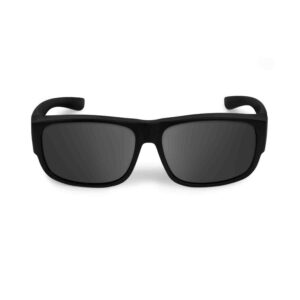
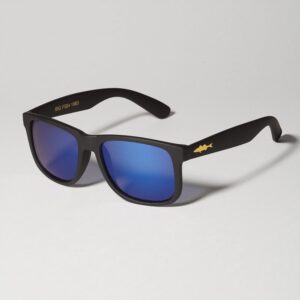
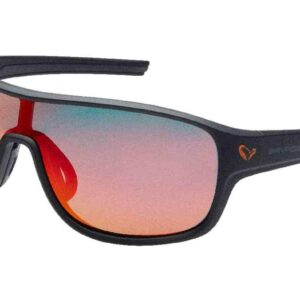
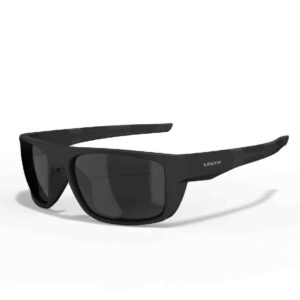
Fishing Sunglasses: The Lens to Your Success
At Gerry’s Fishing, we often say that a high-quality pair of polarized sunglasses is just as important as your rod or reel. If you can’t see the fish, the underwater features, or the subtle movement of your line, you are fishing “blind.” Beyond the obvious style points, technical fishing eyewear is a piece of safety equipment that protects your eyes from harmful UV rays and, more importantly, from stray hooks traveling at high speeds.
Our collection features world-class optics from brands like Costa Del Mar, Wiley X, Fortis Eyewear, and Oakley. These aren’t just standard “shades”—they are precision tools engineered to strip away surface glare and reveal the world beneath the waterline.
Optical Engineering & Specifications
The difference between a “fashion” pair of glasses and a dedicated fishing lens lies in the polarization technology and the light-filtering layers.
| Feature |
Technical Specification Details |
Benefit |
| Lens Material |
Glass (580G) or Polycarbonate (580P). |
Glass offers the best clarity/scratch resistance; Poly is lighter and impact-resistant. |
| Polarization |
99.9% High-Efficiency Polarized Film. |
Eliminates “vertical” light (glare) reflected off the water’s surface. |
| UV Protection |
100% UVA, UVB, and UVC protection. |
Prevents long-term eye strain and “surfer’s eye” (Pterygium). |
| VLT (Visible Light Transmission) |
Ranges from 10% (Bright Sun) to 30%+ (Low Light). |
Determines how much light actually reaches your eye. |
| Hydrophobic Coating |
Oleophobic and Hydrophobic dual-treatment. |
Repels water, salt, and fingerprints for a smudge-free view. |
Where to Use: Matching Lens Color to Environment
Choosing the right lens color is not about aesthetics; it is about “Contrast Enhancement” for specific light conditions.
1. Copper / Amber (The “Everyday” Lens)
The most versatile choice for the UK angler. Copper lenses enhance contrast and “pop” the greens and browns, making them perfect for spotting fish against gravel bottoms or weed beds in freshwater rivers and lakes.
2. Blue Mirror / Grey (Open Water & Bright Sun)
Designed for high-glare environments like the open sea or large reservoirs. These lenses have a lower VLT, meaning they block more light. The blue mirror reflects harsh sunlight, preventing the “squinting fatigue” that occurs during an 8-hour session on the water.
3. Yellow / Sunrise (Low Light & Overcast)
Essential for the early-morning or late-evening specialist. Yellow lenses “brighten” the world by filtering out blue light, allowing you to see your float or a rising trout in conditions where standard sunglasses would be too dark.
4. Green Mirror (Flats & Inshore)
Excellent for high-contrast tracking in shallow water with sandy or silty bottoms. These are the “secret weapon” for bonefish on the flats or stalking carp in the margins during peak summer.
Pro Tip from the Gerry’s Team
The “Light Leak” Test: You can have the best lenses in the world, but if light leaks in through the sides of your frames, your pupils will dilate, and the polarization won’t work effectively. When choosing a frame, look for a “Wrap-Around” style or frames with side shields. To test, put the glasses on and cup your hands around your eyes—if the view suddenly gets clearer and the glare disappears, your frames are letting in too much side-light. Always pair your glasses with a brimmed hat to block overhead light for the ultimate “X-ray” vision.
Frequently Asked Questions
What is the difference between Glass and Polycarbonate lenses?
Glass lenses (like Costa’s 580G) offer the absolute pinnacle of clarity and are almost impossible to scratch. However, they are heavier. Polycarbonate (580P) lenses are virtually shatterproof—making them safer for high-speed boat travel or for kids—and are so light you can wear them all day without “nose-bridge fatigue.”
Why are polarized glasses better than tinted ones?
Tinted glasses just make everything darker; they do nothing to stop the horizontal light waves reflecting off the water. Polarized lenses contain a special filter that only allows vertical light through, effectively “cutting through” the surface reflection so you can see what’s underneath.
How do I clean my fishing sunglasses without scratching them?
Never use your t-shirt or a paper towel. Salt and grit on the lens act like sandpaper. Always rinse them with fresh water first to remove salt/grit, then use a dedicated microfiber cloth and a lens cleaning spray.
What is “Back-Side AR” coating?
AR stands for Anti-Reflective. Premium fishing glasses have this coating on the inside of the lens to prevent your own face or eyes from reflecting back at you when the sun is behind your shoulder. It significantly reduces eye strain.
Why Buy Your Optics from Gerry’s Fishing?
We’ve spent decades on the sands of Morecambe Bay and the banks of the Lune, where the glare can be blinding. We don’t just sell “sunglasses”; we sell the ability to see the strike before it happens. Whether you need a pair of budget-friendly Fortis wraps for stalking or the “Gold Standard” Costa Del Mars for your next tropical adventure, our team is here to help you see what everyone else is missing.