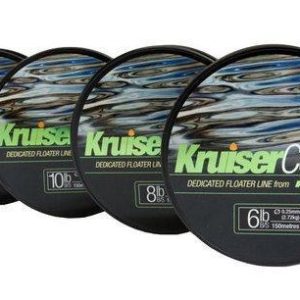
Welcome to the Gerry’s Fishing guide to carp fishing lines. Based in Morecambe, we’ve spent decades helping anglers choose the right “connection” to their target fish. Whether you are targeting elusive 30lb+ specimens on a crystal-clear gravel pit or “bagging up” on a local commercial, your choice of line is the most critical link in your setup.
A good carp line needs to balance strength, abrasion resistance, and casting performance. At Gerry’s, we stock everything from high-tech fluorocarbons to ultra-reliable monofilaments, ensuring that when that alarm screams, you have total confidence in your tackle.
Types of Carp Mainline
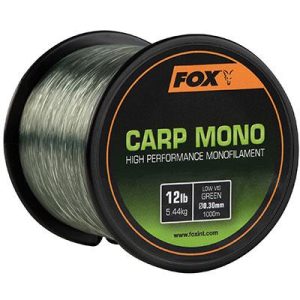
1. Monofilament (Mono)
The all-rounder. Mono is the most popular choice for carp fishing due to its versatility and value.
-
The Benefit: It has a degree of “stretch” (typically 10-15%), which acts as a shock absorber when a fish lunges at the net. It is also generally very abrasion-resistant and easy to knot.
-
Best For: General fishing, snaggy waters, and beginners who want a forgiving line.
2. Fluorocarbon
The “invisible” specialist. Fluorocarbon has a refractive index very close to water, making it nearly impossible for fish to see.
-
The Benefit: It is much denser than mono, meaning it sinks like a brick—perfect for pinning your line to the lakebed to avoid spooking wary fish. It also has very low stretch for better “feel.”
-
Best For: Clear water, slack-line fishing, and wary fish on pressured venues.
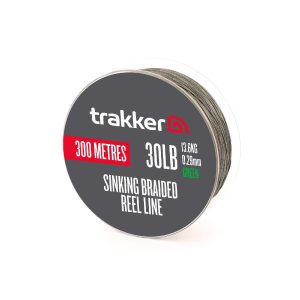
3. Braided Mainline
Zero stretch and ultimate strength.
-
The Benefit: Braid offers incredible bite detection and feeling. Because it doesn’t stretch, you can feel exactly what the lead is landing on (gravel, silt, or weed).
-
Best For: Long-range fishing (100 yards+), fishing in heavy weed, and “feature finding” or spodding.
Technical Specifications: What to Look For
When you message us about a product, we provide the deep-dive specs. Here is what you should consider when browsing the category:
| Feature |
Specification |
Why it Matters |
| Breaking Strain |
12lb – 20lb |
12lb-15lb is the UK standard; 18lb-20lb is for extreme snags or huge fish. |
| Diameter |
0.30mm – 0.40mm |
Thinner lines cast further; thicker lines offer more abrasion resistance. |
| Sinking Rate |
High vs. Neutral |
High-sinking lines (Fluorocarbon) stay out of the way of swimming fish. |
| Memory |
Low Memory |
Low memory means the line won’t “coil” off the spool, reducing tangles. |
Featured Carp Lines & Specifications
At Gerry’s Fishing, we only stock brands that have been proven on the bank.
Korda Subline (Monofilament)
-
Breaking Strain: 10lb, 12lb, 15lb, 20lb
-
Color: Sub-Green or Brown
-
Features: Extremely heavy and fast-sinking for a mono; incredible abrasion resistance.
-
Best Use: The “standard” for heavy-duty carp fishing in the UK.
Gardner GT-HD (High Definition)
Fox Illusion Trans Khaki (Fluorocarbon)
-
Breaking Strain: 16lb / 19lb
-
Features: Uses “Trans Khaki” technology to disappear against almost any lakebed.
-
Best Use: When stealth is your #1 priority. It sinks rapidly and stays pinned to the bottom.
Frequently Asked Questions (FAQ)
Q: How often should I change my carp line?
A: For monofilament, we recommend re-spooling once a year or after a particularly heavy season. UV light and heat eventually break down the nylon. Fluorocarbon and braid last much longer, but you should still check the last few meters for nicks and abrasions after every session.
Q: Should I use a “tapered” leader?
A: If you are casting long distances (100m+), a tapered shock leader is essential. It provides a heavy-duty section to take the force of the cast, while the thinner mainline allows the lead to fly further. Check your fishery rules, as some venues ban leaders for fish safety.
Q: What is the best way to spool a new line?
A: For mono and fluorocarbon, place the spool in a bucket of warm water. This softens the line and allows it to “bed down” on your reel spool more tightly, significantly reducing tangles on your first few casts.
Q: Why does my line keep twisting?
A: Line twist is usually caused by the “winding” action of the reel or by using the drag frequently during a fight. Using high-quality swivels on your rigs and ensuring you spool the line correctly (label facing up or down depending on the reel’s rotation) will minimize this.
Q: Is 12lb line strong enough for a 30lb carp?
A: Yes. The “breaking strain” is the dead-weight strength. In water, with a rod to absorb the lunges and a reel drag set correctly, 12lb line can land almost anything that swims in the UK.
Q: What is “Abrasion Resistance”?
A: This refers to how well the line survives being rubbed against sharp objects like flint, gravel, or sunken branches. Lines like Korda Subline are specifically engineered with a harder outer skin to resist these “nicks.”
At Gerry’s Fishing, we are more than just a shop—we are anglers who live for the next take. If you are unsure which line is best for your local water—whether it’s a silty estate lake or a deep, clear gravel pit—come visit our showroom in Morecambe or call our experts