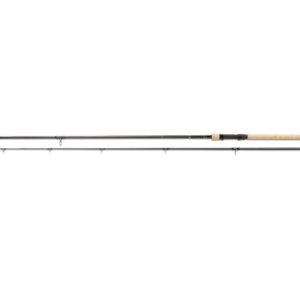
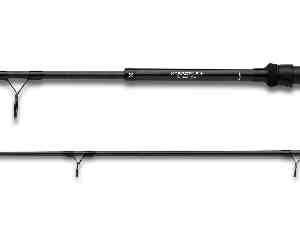
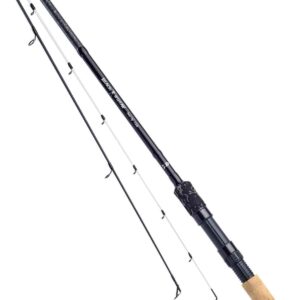
Specialist & Barbel Rods: The Specimen Hunter’s Essential Guide
By Gerry’s Fishing – Morecambe’s Home of Specimen Angling Since 1980
Welcome to the Gerry’s Fishing Specialist & Barbel Rod department. If you are a specimen hunter, you know that this discipline is different. You aren’t just looking for “a rod”—you are looking for a precision tool capable of taming a powerful barbel in a flooded river or delicately presenting a bait for a wary specimen tench.
In 2026, the “Specialist” category has evolved. We no longer rely on clunky, over-gunned carp rods for every big fish. Instead, we have dedicated blanks designed with Progressive Actions that offer the perfect “curve of resilience.” Whether you’re stalking small overgrown streams or tackling the tidal reaches of the Trent and Severn, Gerry’s has the expertise and stock to help you succeed.
What Defines a Specialist or Barbel Rod?
While they may look like beefed-up feeder rods, specialist rods are built to handle higher Test Curves (TC) and significantly more torque.
Key Features of a Specimen Blank:
-
Test Curves (1.25lb to 2.75lb): Unlike match rods, these are rated by the weight required to bend the rod to a 90-degree angle. A 1.75lb TC is the classic “all-rounder” for barbel and big chub.
-
The “Avon” Top: Many specialist rods come with a traditional hollow “Avon” top. This is a stiff, powerful section ideal for touch-legering, float fishing with big bobbers, or using bite alarms.
-
Twin-Tip Versatility: The most popular rods in our range are “Twin-Tops.” These include a standard Avon top and a second carrier section that accepts interchangeable quiver tips (usually 2oz to 6oz).
-
Over-Sized Guides: Designed to allow heavy mono (8lb–15lb) and shock leaders to pass through easily, and to prevent “clogging” from river weed and debris.
Types of Specialist Rods: Choosing Your Weapon
1. Barbel “Workhorse” Rods (12ft, 1.75lb – 2.25lb)
This is the standard for 90% of UK barbel fishing. The 1.75lb model is perfect for medium rivers and summer flows. When the rain arrives and the rivers are in “flood,” the 2.25lb or 2.5lb models provide the “backbone” to hold a 6oz lead in the current.
-
Best For: Barbel, large Bream, and river Carp.
-
Top Brands: Korum, Drennan, and Daiwa.
2. Avon & Quiver Specialist Rods (11ft – 12ft, 1.25lb – 1.5lb)
Lighter and more sensitive. These are the ultimate “fun” rods. They are perfect for targeting specimen Chub, Tench on gravel pits, or even surface fishing for Carp.
-
Best For: Big Chub, Tench, and Perch.
-
Gerry’s Tip: Use the 1.25lb Avon for “roving” on small rivers where you need to stay mobile.
3. Big Water / Tidal Barbel Rods (13ft, 2.5lb+)
On massive venues like the tidal Trent or the lower Severn, you are essentially “mini-carp” fishing. These rods have massive casting power (up to 8oz) to reach the main channel and hold bottom.
The Gerry’s Fishing Specialist Buying Guide
Step 1: Understanding Test Curve (TC)
Don’t be fooled by the numbers; choose based on your target and venue:
-
1.25lb – 1.5lb: Perfection for Chub and big Tench. Extremely “player-friendly” with lots of flex.
-
1.75lb: The “Gold Standard” barbel rod. Balances power and sensitivity.
-
2.25lb+: Necessary for heavy feeders, flooded rivers, and “snag” fishing where you must stop a fish in its tracks.
Step 2: Twin-Tip or Single Tip?
If you can only afford one rod, go Twin-Tip.
Step 3: Action & Taper
-
Fast Taper: Stiff butt section with a snappy tip. Great for long-distance casting.
-
Through Action (Parabolic): Bends right into the handle. This is vital for barbel, as it cushions those famous “head-shakes” and prevents the hook from tearing out under the rod tip.
Technical Specifications Table: Specialist Range
| Model Type |
Length |
Test Curve |
Max Casting Weight |
Line Rating |
| Small River Specialist |
11ft |
1.25lb |
2oz (approx 60g) |
6lb – 10lb |
| Standard Barbel |
12ft |
1.75lb |
4oz (approx 120g) |
8lb – 12lb |
| Power Barbel |
12ft |
2.25lb |
6oz (approx 180g) |
10lb – 15lb |
| Big River / Tidal |
13ft |
2.5lb+ |
8oz+ (approx 220g) |
12lb – 20lb |
Frequently Asked Questions (FAQ)
Q: Why do Barbel rods have white tips?
A: Many specialist rods feature a “High-Viz” white tip section (especially on Avon tops). This is designed for night fishing or low-light conditions, making it easier to see the tip move against the dark water when using a headtorch or isotope.
Q: Can I use a Carp rod for Barbel?
A: You can, but it’s often a mistake. Most carp rods have a “fast” action designed for distance casting. Barbel are incredibly powerful at close range; a stiff carp rod often leads to snapped lines or “hook-pulls” when the fish lunges at the net. A dedicated barbel rod has a softer, more “forgiving” middle section.
Q: What is an “Avon” rod?
A: Originally named after the River Avon, it refers to a rod with a consistent “through action” and a hollow tip. It was designed to be versatile enough to handle both float and leger tactics for specimen fish.
Q: How many quiver tips do I need?
A: Most specialist “Twin-Tip” rods come with two or three carbon tips (usually 2oz, 4oz, and 6oz). Use the 2oz for still water/slow flow and the 6oz for heavy river currents.
Expert Specimen Tips from the Gerry’s Team
-
Safety First: When fishing for barbel, always use a high-quality landing net (minimum 30-inch) and a padded unhooking mat. These fish fight to exhaustion and need care.
-
The “60-Degree” Rule: When ledgering in a river, point your rod tip up at a 60-degree angle. This keeps more line out of the water, reducing the “bow” caused by the current and allowing you to use lighter weights.
-
Check Your Line: Barbel live in gravel and snags. Regularly run your fingers over the last few feet of your line to check for nicks or abrasions