

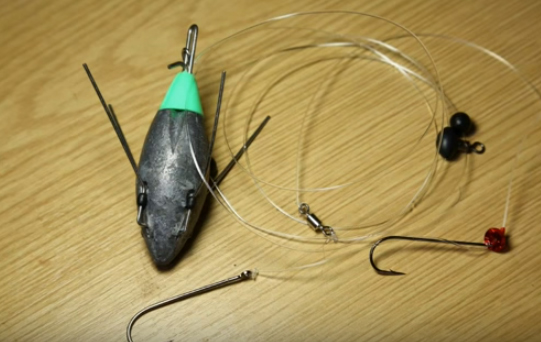
The Ultimate Guide to Tying Sea Fishing Rigs: Master Your Terminal Tackle
Whether you are casting from a shingle beach, fishing off a local pier, or targeting heavy kelp beds from the rocks, your success in sea fishing ultimately comes down to what happens beneath the waves. The connection between your mainline and your bait is the most critical element of your setup.
Here at Gerry’s Fishing, we’ve spent decades helping anglers optimize their terminal tackle. Knowing how to tie the right sea fishing rigs for the right conditions will drastically improve your bite rate, your casting distance, and your ability to land specimen fish.
In this comprehensive guide, we will walk you through the most effective sea fishing rigs, how to tie them step-by-step, and the exact components you need. If you prefer the convenience of expertly crafted tackle, you can browse our complete collection of top-tier sea rigs and terminal tackle right here.
1. The Pulley Rig
The Pulley Rig is arguably the most famous and widely used rough-ground rig in UK sea fishing. Its primary design feature allows the weight of a hooked fish to pull the lead sinker up and away from snags, kelp, and rocks as you retrieve it.
Best Uses:
Fishing over rough or mixed ground for species like Cod, Bass, Smoothhound, and Rays. It is a distance-casting powerhouse.
How to Tie the Pulley Rig:
The Rig Body: Cut a 50-inch length of heavy rig body line (typically 60lb to 80lb monofilament).
The Pulley: Thread on a pulley bead or a strong swivel. This will be the point where your mainline attaches.
The Sinker Attachment: Tie a lead link clip to the bottom of the rig body using a Uni Knot or Grinner Knot.
The Stop: About 20 inches up from the lead link, slide on a crimp, a bead, and a high-quality swivel. Crimp it securely into place.
The Snood: Tie a 30-inch length of 30lb to 40lb snood line to the swivel.
The Hook: Tie your chosen hook (size 2/0 to 4/0) to the end of the snood line. For distance casting, attach an impact shield just above the lead link so your bait clips down seamlessly.
Featured Product: Gerry’s Pulley Pennell Rig
Product Details & Uses: The Gerry’s Pulley Pennell setup is a professionally tied, heavy-duty rig designed for extreme distance and large baits.
Specifications: Constructed with an 80lb Asso Classic main rig body and a 40lb fluorocarbon snood. It features twin Size 3/0 Sakuma Manta Extra hooks rigged in a Pennell style, securely fitted with an SRT spring to maintain snood tension during casting. Incorporates a Breakaway Imp bait clip.
Uses: Ideal for launching large worm, squid, or crab baits over rough ground and strong tides. Perfect for targeting winter Cod, large Rays, and Bass while minimizing the risk of snagging your lead weight on the retrieve.
2. The Flapper Rig (Two-Hook or Three-Hook)
The Flapper Rig is the ultimate “scratching” rig. It is designed to present multiple baits at different depths along the seabed. Because the snoods “flap” freely in the tide, they create an irresistible scent trail and movement.
Best Uses:
Clean to mixed ground fishing at close to medium range. Excellent for targeting shoaling and flatfish species like Whiting, Pouting, Dabs, Flounder, and Plaice.
How to Tie a Two-Hook Flapper:
The Rig Body: Cut a 45-inch length of 60lb rig body line.
Top and Bottom Attachments: Tie a strong swivel to the top (mainline attachment) and a lead link clip to the bottom.
Positioning the Snoods: Measure down 10 inches from the top swivel. Slide on a crimp, a micro bead, a size 8 swivel, another micro bead, and another crimp.
Securing the First Snood: Leave about half an inch of play for the swivel to rotate freely, then crush the crimps firmly with crimping pliers.
The Second Snood: Repeat the process 20 inches further down the rig body.
Attaching the Hook Lengths: Tie 12 to 15-inch lengths of 15lb to 20lb clear snood line to the small swivels.
The Hooks: Finish by tying fine-wire Aberdeen hooks (Size 2 to Size 1/0) to the ends of the snoods.
Featured Product: Gerry’s 2-Hook Flapper Rig
Product Details & Uses: A highly sensitive, multi-bait presentation rig built for maximizing catch rates on clean beaches and estuaries.
Specifications: Tied with a 60lb clear monofilament main body and twin 20lb Amnesia snoods to prevent tangling. Fitted with premium rolling swivels, micro beads, and ultra-sharp Size 1 Aberdeen hooks. Total length is approximately 100cm.
Uses: Designed for close-to-medium range “scratching.” The dual-hook setup allows anglers to mix and match baits (e.g., lugworm on top, mackerel strip on the bottom) to locate feeding flatfish, whiting, and dogfish quickly.
3. The Pennell Rig (Up and Over)
A Pennell setup uses two hooks in tandem on the same snood line. One hook is fixed at the end, while the top hook slides along the line and is wrapped into position. This rig ensures that long, bulky baits are perfectly presented and significantly increases hook-up ratios on shy-biting fish.
Best Uses:
Presenting large, elongated baits like whole squid, peeler crab, or whole lugworm sausages. Exceptional for Cod, Bass, and large Rays.
How to Tie the Pennell Rig:
The Rig Body: Take a 40-inch length of 70lb shock leader or rig body line.
Mainline & Lead Link: Tie your top swivel and bottom lead link.
The Snood Swivel: Slide on a swivel, trapped between two beads and crimps, positioned near the top of the rig body.
The Snood: Tie on 25 inches of 30lb to 40lb snood line.
The Sliding Hook: Thread the snood line through the front of the eye of your top hook. Slide the hook up the line.
The Bottom Hook: Tie your bottom hook securely using a standard Knotless Knot or Grinner Knot.
Setting the Bait: When baiting up, slide the bait onto the bottom hook and push it up the line. Slide the top hook down into the top of the bait, and wrap the snood line around the shank of the top hook 3 to 4 times to lock it in place.
Featured Product: Gerry’s Up and Over Pennell Rig
Product Details & Uses: An aerodynamic, heavy-duty rig explicitly crafted to combat the resistance of large baits during powerful power casts.
Specifications: Features an 80lb shock-leader grade main body with a 40lb high-abrasion resistance snood. Equipped with two Size 4/0 forged carbon steel hooks, a Breakaway Impact Shield for flawless bait clipping, and heavy-duty Gemini lead links.
Uses: Built for extreme range casting over varied seabed terrains. The “up and over” tension design ensures large squid and crab baits remain streamlined during flight and deploy perfectly upon impact with the water, making it the ultimate winter Cod rig.
4. The Loop Rig
The Loop Rig is an evolution of the clipped-down rig. It is aerodynamically superior, allowing snoods to be clipped behind the lead weight during the cast, ensuring maximum distance and zero tangles. Once it hits the water, the hooks release and fish tight to the seabed.
Best Uses:
Maximum distance casting over clean ground. Highly effective for targeting bottom-feeders like Rays, Plaice, and Dabs far out past the breakers.
How to Tie a Loop Rig:
The Main Body: Start with a 50-inch length of 70lb rig line.
The Loop Mechanism: The key to this rig is a cascade swivel or an SRT spring system. Tie a lead link to the bottom.
Positioning the Snoods: Attach your bottom snood swivel low down near the lead link. Attach your top snood swivel high up near the mainline swivel.
Clipping Down: The bottom snood clips directly onto the lead weight (using a bait clip sinker). The top snood utilizes a cascade swivel attached to the bottom snood, allowing the entire rig to pull tight and form a streamlined loop.
Tension: Use an SRT spring on the top snood arrangement to absorb the stretch of the mono during the cast, ensuring the hooks do not prematurely unclip.
Featured Product: Gerry’s Clipped Loop Rig
Product Details & Uses: A precision-engineered distance casting rig that ensures baits arrive at the strike zone in perfect condition.
Specifications: 70lb main rig body line, 20lb fluorocarbon snoods. Fitted with high-tension SRT springs, cascade swivels, and Gemini splash-down bait clips. Armed with Size 1/0 chemically sharpened hooks.
Uses: The go-to rig for tournament-style casters and beach anglers needing to punch baits into headwinds to reach offshore sandbanks. Ideal for delicate baits like ragworm and maddies when targeting distant flatfish and whiting.
Frequently Asked Questions (FAQs) About Sea Fishing Rigs
To round off this guide, we’ve compiled a massive FAQ section covering the most common questions we get at Gerry’s Fishing regarding rig tying, terminal tackle, and bait presentation.
Q: What is the best all-around sea fishing rig? A: If you had to pick just one, the Pulley Rig is the most versatile. It casts incredibly well, handles rough ground beautifully by lifting the lead away from snags, and can present a large enough bait to tempt most of the species found in UK waters.
Q: What pound test line should I use for rig bodies? A: Safety should always be your priority when casting heavy lead weights. Your rig body should match or exceed your shock leader breaking strain. Generally, 60lb to 80lb clear monofilament is standard for rig bodies to handle the immense pressure of power casting a 5oz to 6oz lead.
Q: What is the difference between a pulley rig and a flapper rig? A: A pulley rig uses a single hook (or a two-hook Pennell on a single snood) designed to slide and lift the sinker clear of the seabed when retrieving a fish, making it ideal for rough, rocky ground. A flapper rig features multiple short snoods fixed at different points on the main rig body, designed to “flap” in the tide over clean sand to catch smaller, shoaling species.
Q: Should I use fluorocarbon or monofilament for snoods? A: Monofilament (especially low-memory versions like Amnesia) is excellent for general use; it is cheap, strong, and prevents tangles. Fluorocarbon is denser, sinks faster, and has a refractive index close to water, making it nearly invisible. Use fluorocarbon in clear water during daylight, or when targeting line-shy species like Bass and Bream.
Q: How long should my snoods be? A: It depends on the target species and conditions.
Rough ground/fast tide: Shorter snoods (12–18 inches) help prevent tangles in the kelp.
Clean ground/still water: Longer snoods (24–36 inches) allow the bait to act more naturally and flutter in the gentle current, which is deadly for flatfish and Bass.
Q: What are bait clips used for? A: Bait clips (like the Breakaway Impact Shield or Gemini Splash Down) hold your baited hook close to the main rig body or sinker during the cast. This creates a streamlined, aerodynamic package that casts much further and protects soft baits (like crab or mussel) from blowing apart mid-air.
Q: How do I stop my baits from sliding down the hook during casting? A: Use bait elastic. Wrapping your bait tightly with fine, invisible bait elastic keeps it secured to the hook shank, leaving the hook point exposed. Alternatively, using a Pennell rig (two hooks) spreads the load of the bait and prevents it from bunching up at the bottom of the hook curve.
Q: Why use a Pennell setup instead of a single hook? A: A single hook buried in a huge 6-inch lugworm bait can result in missed bites if the fish strikes the top of the bait. A Pennell rig places a hook at both ends of the bait, doubling your chances of a secure hook-up, no matter which end the fish attacks.
Q: Are circle hooks good for sea fishing rigs? A: Absolutely. Circle hooks are fantastic for catch-and-release fishing. They are designed to slide out of the fish’s throat and catch securely in the corner of the mouth (the scissors). They are highly effective on flapper rigs for flatfish and hounds, but require the angler to simply reel tight rather than making a sweeping strike.
Q: Can I reuse my sea fishing rigs? A: Yes, but with caution. After a session, wash your rigs in fresh warm water to prevent the swivels and hooks from rusting. Always inspect the snood line for abrasions (especially after fishing over rocks or catching toothy fish like smoothhounds). If a snood is frayed or a hook is blunted, cut it off and tie a new one.
Q: Do I need different rigs for pier fishing compared to beach fishing? A: Yes. Pier fishing often requires dropping baits straight down the wall rather than casting for distance. Simple one-up-one-down rigs or standard flappers work brilliantly here. Beach fishing typically demands aerodynamic, clipped-down rigs (like Loop or Pulley rigs) to reach the distant feeding gulleys.
Q: Where can I buy reliable pre-tied rigs and high-quality rig components? A: Rig tying is an art that takes practice. If you want guaranteed knot strength and perfectly balanced aerodynamics right out of the packet, or if you need the highest quality raw materials to tie your own, look no further than our dedicated terminal tackle section.
Upgrade your tackle box today. Browse the full range of expertly tied rigs, heavy-duty hooks, swivels, and rig bodies at Gerry’s Fishing Sea Rigs & Terminal Tackle. Catch more, cast further, and fish with confidence!