

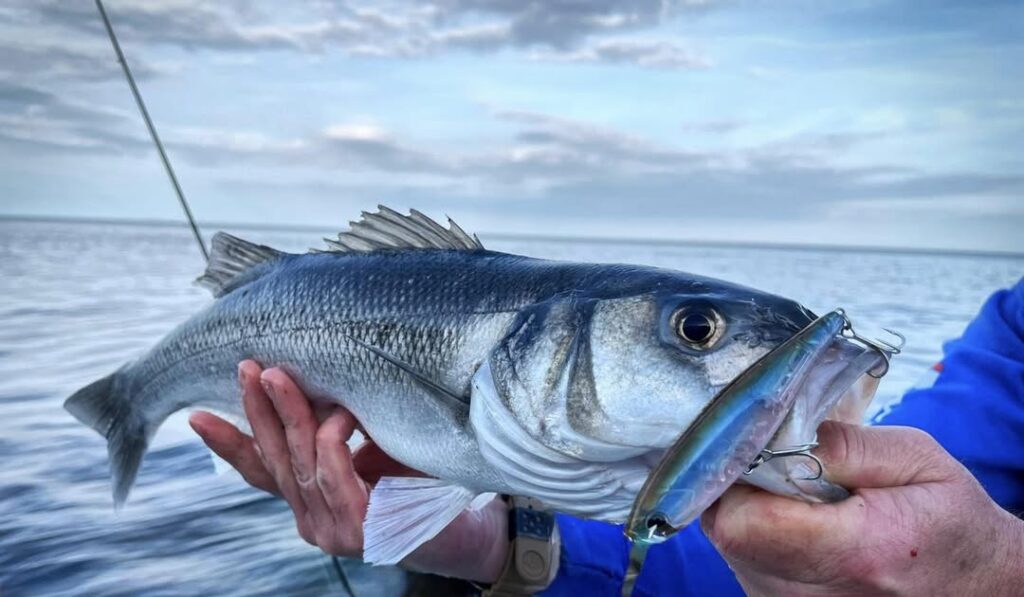
Choosing the right Bass lures. Our Ultimate guide.
By the Team at Gerry’s Fishing
If there is one species that has captured the imagination, frustration, and ultimate devotion of the UK saltwater angler, it is the European Sea Bass. Sleek, aggressive, and highly intelligent, the bass is the ultimate predatory prize of our coastlines.
But here is the truth that every seasoned bass angler knows: there is no such thing as a “magic lure.” Bass are highly adaptable predators that hunt in a massive variety of environments, from inches of crystal-clear water over sand to turbulent, weed-choked rocky gullies in the dead of night. What works flawlessly on a calm Tuesday evening in a river mouth might be completely ignored on a windswept open beach the very next morning.
To consistently catch bass, you do not just need a box full of lures; you need an understanding of when and where to use them. You need to match the hatch, match the depth, and match the water conditions.
In this ultimate guide, we are going to break down the most common UK bass fishing scenarios. We will explore exactly what types of lures thrive in these environments, complete with detailed specifications on lengths, weights, and colours, to help you build the perfect arsenal.
(Note: We won’t be naming specific brand models here, as we want to focus on the science of the lure type itself. You can find all the styles mentioned below in our massive online catalogue).
1. Estuaries and River Mouths
Estuaries are absolute magnets for sea bass. They act as marine superhighways, funneling baitfish, crabs, and shrimp in and out with the tide. The water here is often moving fast, carving out deep channels, sandy drop-offs, and muddy margins.
Because estuaries often feature a mix of fresh and saltwater, the water clarity can vary wildly, and weed can often be swept downriver. You need lures that can handle the flow and imitate the prevalent food sources like sandeels, gobies, and small mullet.
Lure Type: Weedless Soft Plastic Paddle Tails
Product Details & Uses: These are the bread and butter of estuary fishing. A soft plastic body with a thumping paddle tail, rigged on a weedless hook. They can be cast up-tide and allowed to swing naturally across the current, bouncing gently along the bottom where bass wait to ambush prey. The weedless rigging ensures you do not get snagged on the inevitable sunken branches or estuarine weed.
Length: 100mm to 130mm (4 to 5 inches).
Weight: 10g to 15g belly-weighted hooks. You want just enough weight to get it down in the current, but not so much that it drags heavily in the mud.
Colours: Natural silver and olive greens to mimic small baitfish. If the estuary water is clouded by heavy rain run-off, switch to a bright chartreuse or lemon-yellow back to provide a striking visual target.
Lure Type: Surface Walkers (Walk-the-Dog)
Product Details & Uses: For high tide in an estuary, when the water floods over the shallow mudflats or saltmarsh grass, bass will push right up into inches of water to hunt crabs. A floating surface lure, worked with a rhythmic twitching of the rod tip to create a zig-zag “walk-the-dog” action, is utterly deadly here.
Length: 90mm to 110mm.
Weight: 10g to 14g.
Colours: Solid white or bone. Fish looking up see the lure silhouetted against the sky; a solid white belly provides excellent contrast.
2. Shallow Water (Sand Flats and Shallow Reefs)
Fishing in 1 to 3 feet of water is arguably the most visually exciting form of UK bass fishing. Whether you are wading across a vast sandy flat or fishing over a shallow, submerged rocky reef, the key challenge here is stealth.
Bass in shallow water are easily spooked. If a heavy lure crashes onto the surface, the fish will scatter. You need lures that land softly, swim highly in the water column, and look indistinguishable from the real thing.
Lure Type: Weightless Soft Plastic Slugs/Needles
Product Details & Uses: These are straight-bodied soft plastics with no paddle tail, rigged entirely weightless on a wide-gape hook. When twitched, they dart erratically from side to side like a dying sandeel or a panicked sprat. Because they have no built-in weight, they land with a subtle ‘plop’ and can be fished over the very shallowest of reefs without hanging up on the bottom.
Length: 120mm to 150mm.
Weight: Unweighted (the weight comes purely from the density of the plastic itself, usually around 7g to 12g).
Colours: Translucent/clear with a silver flash insert, or natural sandeel patterns. In clear shallow water, natural presentation is absolutely vital.
Lure Type: Shallow Diving Hard Minnows
Product Details & Uses: A traditional hard plastic plug with a very small diving lip. These lures are designed to cast like a bullet and swim just a foot or two beneath the surface with a tight, rolling wobble. They are perfect for covering large expanses of shallow water quickly to locate feeding fish.
Length: 110mm to 130mm.
Weight: 12g to 18g.
Colours: Holographic silver, ghost white, or juvenile mullet patterns.
3. Deep Water (Rock Ledges and Boat Marks)
When you are fishing from steep, deep-water rock ledges (like those found in Cornwall or Wales) or dropping down from a boat, the game changes entirely. The tidal draw is often immense, and standard shallow lures will simply get swept away on the surface, nowhere near the strike zone.
You need heavy, fast-sinking lures that can cut through the water column and reach the depths where big bass are holding behind structure.
Lure Type: Heavy Soft Plastic Shads (Jig Head Rigged)
Product Details & Uses: A thick-bodied soft plastic shad pre-rigged (or manually rigged) onto a heavy lead or tungsten jig head with an exposed top hook. These lures are designed to be dropped vertically or cast and counted down to the seabed, then retrieved with a slow, steady wind to create a heavy vibration.
Length: 120mm to 160mm.
Weight: 25g to 60g (dictated entirely by the speed of the tide and the depth of the water).
Colours: Blue/silver to mimic mackerel, or UV-active pinks and oranges which retain visibility at depths where light penetration is low.
Lure Type: Metal Casting Jigs
Product Details & Uses: Solid metal lures shaped like baitfish. These are the ultimate deep-water searching tools. They cast to the horizon and sink like a stone. They can be fished with a “sink and draw” method—lifting the rod high and letting the metal flutter back down to the bottom like a wounded fish.
Length: 60mm to 100mm.
Weight: 30g to 45g.
Colours: Chrome, holographic silver, or sardine blue.
4. Mussel Beds
Mussel beds are absolute pantries for sea bass. They are rich ecosystems teeming with shore crabs, blennies, gobies, and small baitfish. However, they are also incredibly treacherous for fishing gear. A mussel bed is essentially a field of razor-sharp snags waiting to claim your expensive hard plastics.
Fishing here requires lures that either run strictly above the danger zone or are perfectly equipped to bounce through it without catching.
Lure Type: Suspending Jerkbaits
Product Details & Uses: A hard plastic lure that neither floats to the surface nor sinks to the bottom when paused. Once cranked down to its operating depth (usually 2-3 feet), it hovers perfectly still. Over a mussel bed, you can crank the lure down just above the shells, give it two sharp twitches, and then pause it dead. Bass will often smash the lure during this motionless pause.
Length: 100mm to 120mm.
Weight: 14g to 18g.
Colours: Darker silhouettes work incredibly well here. Black/silver, dark purple, or dark red backs. These mimic the dark, bottom-dwelling fish that live among the shells.
Lure Type: Weedless Creature Baits
Product Details & Uses: Soft plastics designed with multiple appendages to look like crabs, lobsters, or large prawns. Rigged Texas-style (where the hook point is buried back into the plastic), they can be crawled incredibly slowly directly over the crunching mussel shells without snagging.
Length: 70mm to 100mm.
Weight: 7g to 10g cone weight.
Colours: Motor oil, dark brown, or green pumpkin.
5. Tidal Pools and Gullies
As the tide drops, it often leaves large, deep rock pools or cut-off gullies. While many anglers pack up and wait for the flood, astute lure anglers know that bass frequently get trapped in these pools, or deliberately linger in them to feast on trapped prawns and small fish.
Because these pools are confined and often crystal clear, standard bass lures are simply too large and aggressive. You need finesse.
Lure Type: Micro-Lures and Light Rock Fishing (LRF) Plastics
Product Details & Uses: Scaled-down soft plastics (like tiny pintails or micro-shads) fished on ultra-light jig heads. These are flicked into the rock pools and twitched gently to mimic a panicked prawn or a tiny goby darting for cover.
Length: 50mm to 80mm.
Weight: 2g to 5g jig heads.
Colours: Natural shrimp (translucent brown/pink), clear with silver flake, or solid white.
6. Open Beaches (The Surf Zone)
Standing on a shingle or sand beach with the wind in your face and the surf rolling in is classic UK bass fishing. The churning white water provides excellent cover for the bass, allowing them to hunt right at your feet in the undertow.
The main challenge here is the environment. You are battling onshore winds, strong lateral sweeps, and turbulent water. You need lures that cast brilliantly, hold their depth in the rough water, and stand out in the foam.
Lure Type: Weight-Transfer Hard Minnows
Product Details & Uses: Premium hard plastic diving lures equipped with an internal weight-transfer system (usually a tungsten ball bearing that slides to the back of the lure during the cast, and clicks forward upon retrieval). These are designed specifically to punch through strong headwinds and cast massive distances. Once in the water, their medium-diving lip bites into the surf, ensuring the lure isn’t washed out by the crashing waves.
Length: 120mm to 145mm.
Weight: 20g to 30g.
Colours: In white, aerated surf, a solid white lure or a bright yellow/chartreuse lure stands out drastically better than a natural silver pattern.
Lure Type: Casting Metals and Wedges
Product Details & Uses: When the wind is howling at gale force and a plastic lure simply cannot cut through, old-school solid metals are required. Cast out past the breaker line and retrieved at a medium-fast pace through the surf.
Length: 70mm to 110mm.
Weight: 28g to 40g.
Colours: Chrome or holographic blue.
7. Cloudy or Murky Water
Conventional wisdom often dictates that lure fishing is impossible in dirty, “chocolate” water following a storm. While crystal clear water is preferred, bass do not stop eating just because it rains. They rely heavily on their lateral line (a sensory organ running down their flank) to detect the vibrations of struggling prey in zero visibility.
When the water is highly coloured, your lure needs to be loud, aggressive, and highly visible.
Lure Type: Wide-Action Paddle Tails
Product Details & Uses: Soft plastics with an oversized, aggressively angled paddle tail. These displace a massive amount of water, sending out heavy, thumping vibrations that a bass can track from yards away without ever seeing it.
Length: 120mm to 150mm.
Weight: 15g to 25g.
Colours: The rule of thumb for dirty water is stark contrast. Solid white, blazing chartreuse/lemon, or completely solid black. (Black creates the strongest possible silhouette against the muddy water).
Lure Type: Rattling Crankbaits
Product Details & Uses: Hard plastics with a fat body and an internal chamber filled with glass or steel beads. As the lure wobbles, it emits a loud, rhythmic clacking sound that acts as an acoustic beacon for predatory fish in murky conditions.
Length: 90mm to 120mm.
Weight: 15g to 20g.
Colours: Firetiger (bright green/orange/yellow stripes) or solid white.
8. Rocky Rough Ground & Kelp Beds
This is the ultimate bass territory. Thick forests of kelp, jagged granite boulders, and swirling currents. Big bass love heavy structure because it offers total ambush superiority.
Throwing an expensive hard plastic with two treble hooks into a kelp bed is a guaranteed way to lose your money in a single cast. Here, weedless rigging is not just an option; it is an absolute necessity.
Lure Type: Texas-Rigged Soft Plastic Worms/Slugs
Product Details & Uses: Long, snake-like soft plastics rigged on a wide-gape weedless hook with the hook point perfectly skinned inside the plastic. A small cone weight is threaded onto the line in front of the hook. This rig can be dragged directly through the thickest kelp fronds and bounced over jagged rocks without snagging. When a bass bites, its jaws crush the soft plastic, exposing the hook point for a solid hookset.
Length: 140mm to 180mm (6 to 7 inches).
Weight: 7g to 15g cone weights.
Colours: Red, dark orange, and brown. These colours perfectly mimic the rockling, wrasse, and crabs that live hidden within the kelp forests. A dark red lure fished over a brown kelp bed is a proven killer.
Lure Type: Heavy Belly-Weighted Weedless Shads
Product Details & Uses: Similar to the estuary paddle tails, but beefed up. Utilizing heavily weighted weedless hooks (where the lead is molded onto the shank of the hook), these allow you to sink a large paddle tail deep into the rocky gullies while remaining totally snag-proof.
Length: 120mm to 160mm.
Weight: 15g to 25g.
Colours: Natural sandeel or rhubarb and custard (red and yellow).
Conclusion
Understanding your environment is the key to unlocking consistent lure fishing success. A bass feeding in two feet of crystal clear water over a sandbank requires a drastically different approach to a bass hunting in twenty feet of turbulent, kelp-strewn tide. By tailoring your lure’s depth, profile, action, and colour to the exact scenario in front of you, you take the luck out of the equation.
Ready to build your ultimate UK bass arsenal? You can find every single type of lure, weight, and accessory mentioned in this guide, hand-picked by our expert team, right here: