

Bass Lure Fishing UK | The Ultimate 2026 Guide by Gerry's Fishing
Shop Now
Lure fishing for European Sea Bass (Dicentrarchus labrax) around the rugged coastlines, sweeping surf beaches, and muddy estuaries of the UK has transformed from a niche angling tactic into an absolute obsession. The sheer thrill of a surface strike, the violent headshakes transmitting through braided line, and the chess match of locating fish in dynamic tidal systems make it the pinnacle of UK saltwater sport.
However, the barrier to entry can feel steep. Walk into Gerry’s Fishing, and you are confronted with walls of high-modulus carbon rods, sealed spinning reels, and hundreds of lures in every conceivable shape, colour, and weight. Choosing the wrong tackle or misreading the conditions leads to endless frustration and lost gear.
This guide is designed to completely demystify the process. Drawing on decades of combined experience from our pro staff and our deep understanding of the UK tackle market, we are going to break down every single aspect of bass lure fishing. By the end of this guide, you will know exactly how to build your setup, select your lures, read the water, and consistently put silver scales on the bank.
Part 1: Anatomy of the Perfect Bass Lure Rod
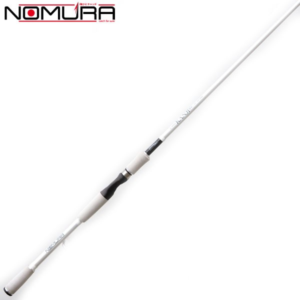
Your rod is the most critical piece of equipment you will buy. It is not just a stick to cast a weight; it is a precision tool that must launch lures into headwinds, impart life-like action into inert plastic, detect the subtlest of plucks, and possess the muscular backbone to stop a double-figure bass from burying itself in the kelp.
1. Rod Length: Matching the Tool to the Terrain
The length of your rod dictates your casting leverage, your line control over the surf, and your maneuverability.
7ft to 8ft 6in (The Finesse/Estuary Class): These shorter, lighter rods are precision instruments. If you are fishing calm estuaries, tidal creeks, or wading shallow mudflats where you need to flick small, unweighted soft plastics under overhanging branches or around boat moorings, this is your weapon. They are also the standard for kayak and boat anglers where space is restricted.
8ft 8in to 9ft 6in (The UK Standard All-Rounder): If you are buying one rod to do it all, this is the bracket. A 9ft rod is the sweet spot. It provides enough leverage to punch a 25g metal 80 yards, yet remains crisp and light enough to rhythmically “walk the dog” with a surface lure for four hours without crippling your wrist. It allows you to steer fish around close-in snags while maintaining excellent lure contact.
9ft 6in to 11ft (The Surf and Rough Ground Specialists): These longer blanks are designed for specific, demanding environments. If you fish open, Atlantic-facing surf beaches where you need to keep your braided line high above the crashing waves, a 10ft rod is essential. Similarly, if you fish high rock marks where you need to winch fish up and away from jagged ledges at your feet, the extra length provides critical clearance.
2. Casting Weight Ratings
A rod’s casting weight rating (e.g., 10-30g) tells you the optimal lure weights the blank is engineered to load and fire efficiently.
| Lure Category | Typical Weight Range | Recommended Rod Rating | Ideal Application |
| Ultralight / Finesse | 3g – 12g | 5g – 15g | Weightless plastics, micro-jigs in calm estuaries. |
| Standard / Versatile | 12g – 25g | 10g – 35g | The sweet spot. Covers 90% of UK plugs, soft plastics, and surface lures. |
| Heavy / Distance | 25g – 50g | 15g – 50g | Heavy metals, casting long distances into strong headwinds, fast tidal rips. |
Gerry’s Pro Tip: Do not consistently cast lures at the absolute maximum of your rod’s rating. If your rod is rated 10-30g, its “sweet spot”—the weight it casts furthest with the least effort—will be right in the middle, around 18-22g.
3. Rod Action and Taper
The “action” describes where the rod bends when under pressure, while “taper” refers to the thickness of the blank from butt to tip. For UK bass fishing, we are almost exclusively looking at Fast or Extra-Fast actions.
Fast Action: The rod bends primarily in the top 25-30%. This provides a stiff lower section (the “backbone”) for setting the hook hard into the bony mouth of a bass. More importantly, a stiff blank doesn’t act like a shock absorber when you twitch your rod tip; it transmits that energy directly to the lure, bringing it to life.
Moderate/Regular Action: Bends down to the middle of the blank. While great for absorbing the lunges of a fish (meaning fewer hook-pulls), they feel “spongy” when trying to work surface lures and lack the raw casting punch of a fast-action rod. Generally avoid these for dedicated lure work.
4. Guides and Components
Saltwater is highly corrosive. Cheap rod guides will rust and crack within weeks, destroying your expensive braided line.
When selecting a rod, look specifically for Fuji K-Series guides (or equivalent anti-tangle designs from brands like Seaguide). The forward-sloping frames of K-guides shed wind knots automatically—a lifesaver when casting thin braid into a stiff crosswind. Ensure the guide rings are made of Alconite, SiC (Silicon Carbide), or Torzite, which are hard enough to withstand the friction of braid.
Part 2: Choosing the Ultimate Bass Reel
A bass lure reel takes a tremendous beating. It is subjected to constant casting and retrieving, saltwater spray, sand, and the stress of fighting strong fish in heavy currents.
1. Reel Sizing
For the UK coastline, you need a fixed spool (spinning) reel in a 3000, 4000, or 5000 (Compact) size. (Note: Shimano and Daiwa sizing conventions differ slightly, but these are the benchmarks).
3000 Size: Weighing around 200g-230g, these balance perfectly on lighter 8ft to 8ft 6in rods. They hold plenty of 15lb braid for estuary and calm weather work.
4000 Size: The undisputed king for 9ft to 9ft 6in rods. A 4000 reel provides a wider spool (which aids casting distance by reducing line friction), a stronger drag system, and larger internal gearing to handle the torque of pulling deep-diving plugs through heavy water.
2. Gear Ratios: Speed vs. Power
The gear ratio (e.g., 6.2:1) means the rotor turns 6.2 times for every single rotation of the handle.
High Gear (HG / XG): Ratios of 5.8:1 up to 6.4:1. This is highly recommended for bass fishing. A high retrieval rate (often picking up 90cm to 100cm of line per crank) is crucial. When a bass smashes your lure and swims towards you, you need to gather slack line instantly to set the hook. It also helps keep your lure from digging into the seabed when fishing over very shallow, snaggy reefs.
Standard Gear (PG / Normal): Ratios around 4.8:1 to 5.2:1. These offer more cranking power (like a tractor in low gear) but are generally too slow for working surface lures aggressively. They are, however, excellent for painfully slow retrieves with weedless plastics in the dark.
3. Saltwater Sealing (MagSealed / X-Protect)
Saltwater intruding into your reel’s gear box will destroy it. Look for reels that feature dedicated saltwater sealing. Daiwa uses “MagSealed” technology (a magnetic oil barrier), while Shimano uses “X-Protect” (a labyrinth structure and water-repellent coating). While no reel is truly waterproof if submerged, these technologies ensure a reel will survive years of heavy spray and rain.
Part 3: Lines, Leaders, and Connections
Your line is your only connection to the fish. Skimping here will cost you the fish of a lifetime.
1. Mainline: The Braid Revolution
Monofilament mainline is obsolete in modern lure fishing. You must use PE Braid.
Braid has zero stretch, meaning you have total, instant contact with your lure. You will feel a blade of eelgrass catch your hook, and you will feel the sharp “tap” of a bass inhaling your plastic. Because it is incredibly thin for its strength, it cuts through the wind and water, allowing for vastly superior casting distances.
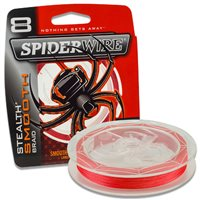
Specification: Look for an 8-strand PE Braid. 8-strand is rounder, smoother, and quieter through the rod rings than cheaper 4-strand braids.
Breaking Strain: 15lb to 20lb (PE 1.0 to PE 1.2) is the UK standard. This provides enough strength to pull free from weeds while remaining thin enough (around 0.13mm – 0.16mm) to cast light lures effectively.
2. The Fluorocarbon Leader
Because braid has zero stretch, it has terrible abrasion resistance. If it rubs against a barnacle-covered rock under tension, it will snap instantly. Furthermore, braid is highly visible in clear water.
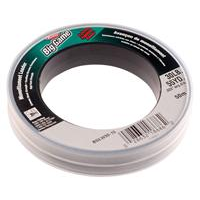
You must attach a Fluorocarbon Leader to the end of your braid. Fluorocarbon has the same refractive index as water, making it virtually invisible. It is also dense and highly resistant to being nicked by rocks or the raspy teeth of a bass.
Specification: Use 2 to 4 feet of 15lb to 20lb 100% Fluorocarbon. If you are fishing violently rough rock marks, step up to 25lb.
The Knot: The connection between your thin braid and thicker fluorocarbon must flow smoothly through your rod guides. The FG Knot is the undisputed champion—it is the thinnest, strongest knot available. If you struggle tying the FG on a windy beach, the Albright Knot or Crazy Albright are reliable backups.
Part 4: The Ultimate Bass Lure Arsenal
Bass feeding habits shift dramatically based on water depth, clarity, light levels, and the prevalent baitfish. A complete angler carries a selection of lures to cover the entire water column: top, middle, and bottom.
1. Topwater / Surface Lures
Surface fishing is visual, explosive, and addictive. These lures create wakes, splashes, and noise to imitate panicked prey trapped against the surface.
Walk-the-Dog Lures (e.g., Xorus Patchinko, Savage Gear Surf Walker, IMA Salt Skimmer): These long, pencil-shaped lures lack a diving lip. By rhythmically twitching your rod tip downward while slowly reeling, the lure zig-zags left and right across the surface. This action drives bass wild.
Where to use: Shallow reefs, over kelp beds, calm estuaries.
Pro Tip: If a bass strikes and misses, do not stop retrieving. A panicked baitfish doesn’t stop to see what tried to eat it; it flees. Keep the rhythm going, and the bass will often strike a second or third time.
Poppers: Feature a cupped face. A sharp jerk of the rod creates a loud “bloop” and a spray of water.
Where to use: When there is a heavy chop on the water and a “walk-the-dog” lure gets lost in the waves, a popper creates enough noise to call fish up from the depths.
2. Sub-Surface / Shallow Diving Plugs
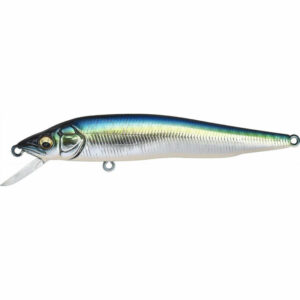
The bread and butter of UK bass fishing. These hard plastics feature a small plastic lip (bib) under the nose. The resistance of the water against the lip pulls the lure under to a predetermined depth (usually 1ft to 3ft) and imparts a tight wobbling or rolling action.
Classic Profiles (e.g., IMA Komomo II, Tackle House Feed Shallow, Duo Tide Minnow): These are designed to cast like bullets thanks to internal magnetic weight-transfer systems. Upon landing, the weights shift forward, balancing the lure for a seductive swim.
Where to use: Fishing over mixed ground (sand and rock), shallow beaches, and sweeping tidal currents.
Pro Tip: Retrieve speed is critical. A slow, steady wind that allows the lure to lazily roll flanks is usually more effective than a fast, frantic wind. Pause the retrieve occasionally—the lure will slowly rise or suspend, which is often the exact moment a following bass will attack.
3. Weedless Soft Plastics
If you are not fishing weedless soft plastics, you are missing out on the biggest bass. Big bass live in terrible terrain: heavy kelp forests, deep rocky gullies, and snag-infested reefs. Hard lures with treble hooks will snag and be lost immediately in this terrain.
The System: The lure is threaded onto a specialized wide-gape hook. The point of the hook lies flat against (or slightly buried in) the back of the rubber lure. When dragged over a rock, it slides over smoothly. When a bass bites down, the soft rubber compresses, exposing the razor-sharp hook point.
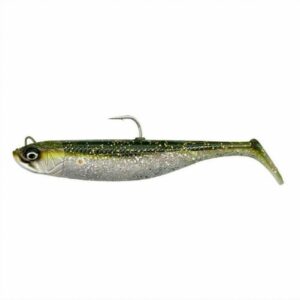
Paddle Tails (e.g., Fiiish Black Minnow, Savage Gear Sandeel, Megabass Spindle Worm): The boot-shaped tail thumps heavily as it is retrieved or allowed to sink. Excellent for searching large areas of water.
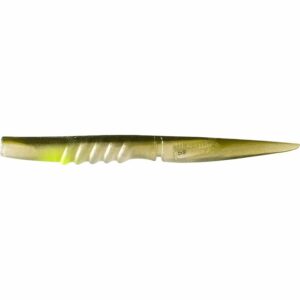
Slugs / Straight Tails (e.g., Albie Snax, OSP DoLive Stick, Senkos): These look like simple sticks of rubber, but rigged weightless on a weedless hook, they are deadly. Fished with sharp twitches, they dart erratically like a dying sandeel.
Where to use: Anywhere. But they are strictly necessary for heavy rock marks, thick weed beds, and night fishing.
4. Metals and Casting Jigs
When the wind is blowing a gale directly into your face, casting a lightweight plastic plug is impossible. This is where dense metal lures come in.
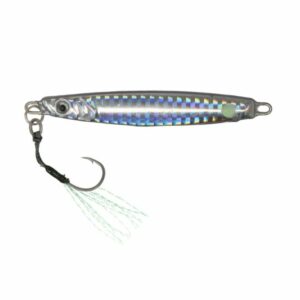
Profiles: Ranging from 20g to 40g, these aerodynamic slices of metal cut through the fiercest headwinds.
Where to use: Deep water rock marks, pushing out past the surf break on ocean beaches, or when bass are visibly feeding on small sprats at extreme range.
Technique: Cast far, let it sink to the bottom, and retrieve with aggressive lifts of the rod tip, letting it flutter back down. Bass often hit metals “on the drop” as the lure flutters downwards like a stunned fish.
Part 5: Mastering the Environment (Weather, Tides, and Terrain)
You can own a £1000 rod-and-reel combo, but if you cast into lifeless water at the wrong stage of the tide, you will catch nothing. Bass fishing is hunting.
1. Decoding the Tides
Bass are fundamentally lazy but opportunistic; they use the tidal flow to do the work for them. They wait in ambush positions for the current to wash baitfish, crabs, and prawns past them.
Springs vs. Neaps: Spring tides (occurring around the full and new moons) have the largest difference between high and low water, creating the strongest, fastest currents. Neap tides (half moons) have the weakest currents. Generally, bass prefer the strong water movement of Spring tides, as the turbulent water dislodges more food.
The Rule of Twelfths: Water does not move at a constant speed during a tide. The flow is slowest at absolute high and low water (slack water). The current moves fastest during the middle two hours of the flood (coming in) and the ebb (going out). This period of maximum water movement is often the feeding window.
Choke Points: Look for areas where water is forced through a narrow gap—between two sandbanks, over a shallow reef, or at the mouth of an estuary. These choke points accelerate the water, creating rips where baitfish become disoriented. Cast your lure right into the seams of these rips.
2. Weather Conditions: The “Bass Chop”
Bluebird skies, blazing sunshine, and a flat-calm sea are terrible conditions for lure fishing. Bass have excellent eyesight; in clear, calm water, they have too much time to inspect your lure and spot the hooks and line.
The Ideal Conditions: You want a steady onshore wind (blowing from the sea to the land). This creates waves and a disturbed surface known as the “bass chop.” The turbulent, aerated water reduces visibility, making the fish less cautious and more aggressive.
After the Storm: The 24 to 48 hours immediately following a heavy gale are prime time. The violent surf tears up the seabed, dislodging crabs, worms, and injured baitfish. As the water begins to clear from a muddy brown to a “milky green” colour, the bass will move in close to mop up the easy meal.
Barometric Pressure: Bass are highly sensitive to pressure changes. A rapidly falling barometer (indicating an approaching storm) often triggers frantic feeding behavior. Conversely, a prolonged period of high pressure (settled, bright weather) can make them lethargic.
3. Night Fishing: The Ultimate Frontier
Many anglers pack up when the sun goes down, which is a massive mistake. Bass are apex nocturnal predators. Under the cover of darkness, large, cautious bass that hold in deep water during the day will push right into water barely knee-deep to hunt crabs and sandeels among the rocks.
Tactics for the Dark: Put away the surface poppers and fast-moving metals. Night fishing is about stealth and painfully slow retrieves. A weightless soft plastic (like a DoLive stick) or a shallow diving plug (like a Feed Shallow) reeled at a snail’s pace is devastating.
Colour Choice: Paradoxically, black or dark purple lures are the best choices at night. From below, a black lure creates the strongest, most solid silhouette against the ambient light of the night sky or moon.
Discipline: Turn your headlamp off. Flashing a bright light over the water will instantly spook every bass in the area. Only use your light pointing away from the water when unhooking a fish or re-tying a knot.
Part 6: Gerry’s Fishing Pro Scenarios
To help you put all this theory into practice, here is how our staff tackle three distinct UK scenarios.
Scenario A: The Shallow Surf Beach
The Mark: A flat, sandy beach with a rolling surf and a slight onshore breeze.
The Tactic: Bass will patrol the “surf table”—the knee-deep water right where the waves crash and churn up sandeels. Wading out chest-deep is a mistake; you are standing exactly where the fish want to feed. Cast parallel to the shoreline, just behind the breaking waves.
The Tackle: A 9ft 6in rod, 4000 reel. A shallow diving plug (like a white IMA Hound Glide) or a 15g paddle tail soft plastic.
Scenario B: The Rough Rock Mark & Kelp Forest
The Mark: Deep water dropping off a rocky ledge, thick with brown kelp and hidden boulders.
The Tactic: This is ambush territory. Bass will sit in the kelp fronds waiting to ambush wrasse and pollack. Hard plastic lures will snag instantly. You must fish weedless.
The Tackle: An 8ft 8in fast-action rod. A weedless rigged Fiiish Black Minnow (khaki colour). Cast out, let it hit the bottom, and retrieve with a slow “sink and draw” motion, lifting the rod tip high to bounce the lure over the submerged rocks.
Scenario C: The Calm Estuary
The Mark: A muddy tidal creek, flat calm water, incoming tide pushing over mudflats.
The Tactic: Finesse is key. The water is clear and shallow, so the fish are easily spooked. Match the hatch closely—if they are feeding on tiny fry, use small lures.
The Tackle: A light 8ft rod (5-15g). A walk-the-dog surface lure (like an IMA Salt Skimmer) worked rhythmically across the surface, or a small weightless soft plastic twitched silently through the current.
Frequently Asked Questions (FAQs)
How do I know if my lure is swimming correctly?
Always test a new lure in the clear water right at your feet before casting it out. Watch how it behaves when you reel fast, reel slow, or twitch the rod. Understanding exactly what the lure looks like underwater gives you the confidence to fish it properly when it is 50 yards out.
Do I need to use a wire trace for bass?
Absolutely not. Bass do not have sharp, cutting teeth like pike; they have abrasive pads. A wire trace will ruin the action of your lure and drastically reduce the number of bites you get. A 15lb-20lb fluorocarbon leader provides more than enough abrasion resistance against their rough mouths.
Can I use my carp rod or beachcaster to lure fish for bass?
No. A beachcaster is far too heavy and stiff; you won’t be able to cast a 20g lure, and the weight will exhaust you in 20 minutes. A carp rod, while lighter, has a parabolic (through-action) bend designed for lobbing heavy leads, not snapping a light lure out or transmitting sharp twitches to a surface bait. Dedicated lure rods are essential.
What is the best colour lure for bass?
There is no single magic colour. Follow this simple rule:
Bright day / Clear water: Natural, translucent patterns (silver, white, sandeel).
Overcast day / Murky water: Solid, contrasting colours (chartreuse, solid white, firetiger).
Night: Black, dark purple, or dark red.
How do I unhook and handle a bass safely?
Bass have razor-sharp gill plates and a spiky dorsal fin. Never put your fingers inside their gills. Use a wet towel or a dedicated lip-grip tool to control the fish while you use long-nosed pliers to remove the hooks. If you are releasing the fish, support its belly in the water facing into the current until it kicks away strongly.