Bobbins: The Art of Visual Bite Indication
In the pursuit of specimen fish, your bite alarm is only half of the story. While the alarm provides the audible alert, Bobbins (or hangers) provide the critical visual data and mechanical tension required to trigger that alarm. A bobbin acts as a counterweight to your line, ensuring that whether a fish swims away from you or towards you (a “drop-back”), the movement is translated into a clear signal.
At Gerry’s Fishing, we know that subtle indication can be the difference between a landed fish and a missed opportunity. Our range of bobbins covers everything from ultra-lightweight PTFE heads for slack-lining to heavy-duty stainless steel versions for long-range work in high winds.
Technical Specifications & Material Selection
Choosing the right bobbin material and weight is essential for balancing sensitivity with stability. Below is a breakdown of the primary materials used in modern indicator heads.
| Feature |
PTFE (Teflon) Bobbins |
Acrylic/Plastic Bobbins |
Stainless Steel Bobbins |
| Weight Profile |
Ultra-Lightweight |
Mid-Weight (Versatile) |
Heavy-Duty |
| Primary Benefit |
Minimal resistance; non-stick |
High-visibility; light-reactive |
Maximum stability in wind |
| Best Used For |
Slack-lining / Short range |
All-round carp & specialist |
Long-range / Fast flow |
| Common Attachment |
Dacron Cord / Ball Chain |
Ball Chain / Link Chain |
Rigid Arm / Heavy Chain |
| Isotope Slot |
Usually 3mm x 10mm / 15mm |
Often features 360° glow |
Internal or external slots |
| Durability |
High (Impact resistant) |
Moderate (Visual focus) |
Extreme (Lifetime use) |
Pro Tip: The “Slack-Line” Mastery
When fishing “slack lines” at short to medium range, you want your bobbin to provide as little resistance as possible. Use a lightweight PTFE head on a soft Dacron cord. Instead of hanging the bobbin halfway between the alarm and the floor, set it so the head is just touching the ground or resting an inch above it. This ensures that even the tiniest “pluck” from a wary fish will lift the bobbin and trigger the alarm before the fish feels the weight of the lead.
Applications: Where to Use Specific Bobbin Setups
-
Small Estate Lakes & Lily Pads: When fishing close to snags with slack lines, use lightweight acrylic bobbins. Their high-visibility colours allow you to spot tiny movements even before your alarm bleeps, giving you a head start on steering fish away from danger.
-
Massive Reservoirs & High Winds: In “big water” scenarios where wind-bow can pull a light bobbin into the alarm, switch to stainless steel weights. Adding “add-on” weights (usually 5g to 20g) ensures the line stays pinned against the roller wheel, filtering out false bleeps caused by waves.
-
Night Fishing Sessions: For overnight stays, ensure your bobbins are fitted with isotopes. A glowing bobbin allows you to visually confirm a “drop-back” (where the bobbin falls) versus a “run” (where it flies up to the rod), allowing you to judge the strike perfectly in the dark.
Frequently Asked Questions (FAQs)
Q: Do I need to buy bobbins that match my alarm brand?
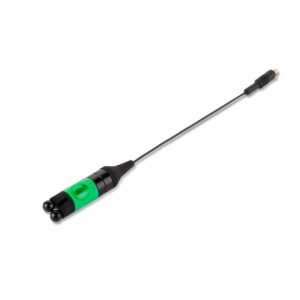
A: Generally, no. Most bobbins use a universal “hockey stick” attachment that screws into the 3/8″ BSF thread of any bankstick or buzz bar. However, if you want illuminated bobbins, you must ensure the 2.5mm jack plug is compatible with your alarm’s power-out socket.
Q: What is a “Hockey Stick” attachment?
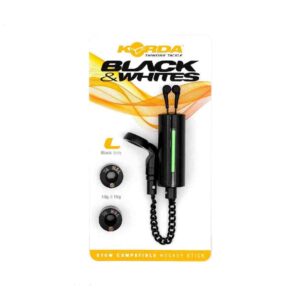
A: This is the small bracket that sits underneath your bite alarm. The bobbin cord or chain attaches to this bracket. Most of our bobbins at Gerry’s Fishing are supplied with a hockey stick, but we also stock “Quick Release” versions that allow you to snap the bobbins on and off in seconds.
Q: Why are some bobbins different shapes?
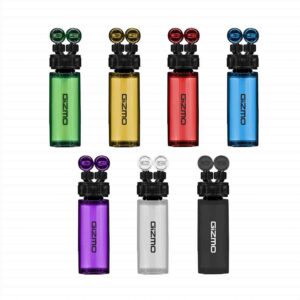
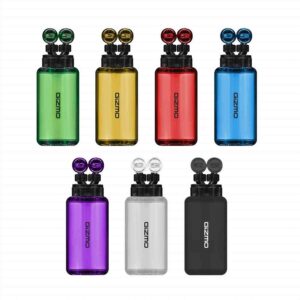
A: “Slim” or “Pencil” bobbins are designed to be aerodynamic and lightweight, reducing wind resistance. Larger “Bucket” or “Barrel” shapes are often designed to house larger isotopes or offer more surface area for visual tracking at distance.
Q: How do I know how much weight to add?
A: The rule of thumb is to use the minimum weight necessary to keep the line taught against the alarm. If your bobbin is constantly “flickering” due to wind or current, add 5g increments until it sits steady. If you are fishing in a river, you will need significantly more weight to counteract the flow of the water against the line.
Q: Can I use bobbins for pike fishing?
A: Absolutely. For pike, “drop-off” bobbins are used. These are designed to unclip from the line entirely when a fish takes the bait, allowing the pike to run with zero resistance, which is vital for preventing dropped baits with this sensitive species.