0

Bite Alarms & Accessories

Bite Alarms & Accessories: Precision Indication for the Modern Angler

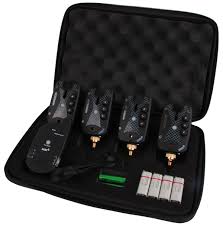
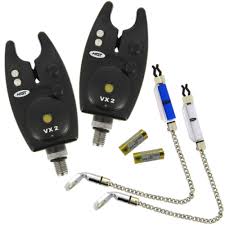
In the pursuit of specimen fish, especially during long nights or multi-rod sessions, a reliable Bite Alarm system is your most vital point of contact with the underwater world. A modern alarm does more than just make a sound; it filters out false movements from wind or flow, distinguishes between a “run” and a “drop-back,” and transmits that information instantly to a wireless receiver in your bivvy. At Gerry’s Fishing, we curate a collection of the world’s most advanced indication technology—from the legendary vibration-sensing Delkims to the ultra-reliable roller-wheel systems from Fox and Nash.


Choosing the right alarm is about balancing sensitivity with reliability. Whether you are fishing a small estate lake or a massive continental reservoir, our range of alarms and accessories ensures you never miss a moment of the action.


Technical Specifications & Indication Technology

Bite alarms generally fall into two categories of detection: Roller Wheel and Vibration Sensing. Understanding these is key to selecting the right tool for your specific environment.

Feature Roller Wheel Alarms (e.g., Fox MX) Vibration Sensing (e.g., Delkim v2) Entry-Level Wireless (e.g., Sonik)
Detection Method Magnets on a rotating roller wheel Piezo-vibration (no moving parts) Standard Magnet Roller
Sensitivity Levels 2 – 8 Graduated Settings Digital “Response” Control 4 – 6 Fixed Settings
LED Options Multi-colour (Switchable) Multi-colour (v2 Models) Fixed or 4-Colour Sets
Wireless Range 200m – 500m Up to 750m (Digital) 100m – 150m
Battery Type 2x AAA or AA 9V (PP3) Square 2x AAA or 9V
Best For General use, rivers, & wind Extreme sensitivity & snag fishing Beginners & budget-conscious

Pro Tip: The “Vibration vs. Roller” Edge

When fishing “locked up” against snags where you cannot give an inch of line, vibration sensing alarms (like the Delkim Txi-D v2) offer a significant advantage. Because they don’t require the line to physically move a roller wheel to trigger, they can detect the tiny vibrations of a fish picking up the bait and moving its head before it even begins to pull the line. Conversely, on high-flow rivers, a roller wheel alarm with the sensitivity dialed down is often better, as it won’t be triggered by the constant “thrum” of the current against the line.


Applications: Where to Use Your Alarm Setup

  • Large Reservoir & Continental Sessions: For massive waters like Chew Valley or the great lakes of France, a high-range system like the Nash Siren R4 is essential. Its “Homecoming Mode” (a rear-facing LED) guides you back to your swim by boat in the dark, while the 750m+ receiver range ensures you stay connected even in dense foliage.


  • Commercial Carp Fishing: A mid-range set like the Fox Micron MX or Fox Mini Micron X is perfect. These offer switchable LED colours (Red, Orange, Green, Blue, Purple, White) so you can match your bobbins or simply change the look of your setup on a whim.


  • The Mobile Specialist: If you are roaming or fishing short sessions, look for a compact system like the Prologic BAT+ or the Sonik Herox. These provide reliable indication in a smaller footprint, making them easy to pack into a small carryall or rucksack.


Essential Accessories for Your Setup

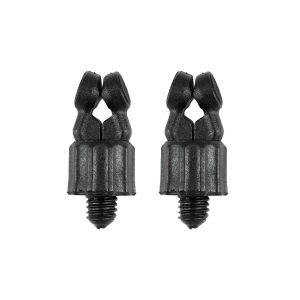
  • Snag Ears: Critical for “side-on” takes. These vertical bars (often carbon or stainless) prevent your rod from being pulled off the alarm by a powerful fish.

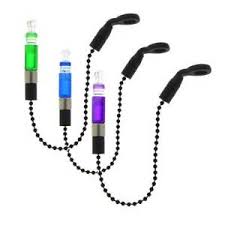
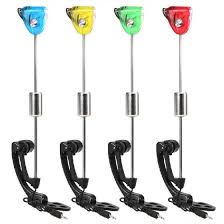
  • Indicators (Bobbins & Swingers): These provide visual indication and “tension” to the line. Mechanical swingers are best for windy conditions and long-range fishing, while lightweight bobbins are ideal for slack-line fishing at short range.

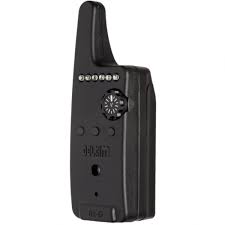
  • Sounder Boxes & Receivers: Ensure your receiver is kept in a dedicated “silicone skin” or hard case to protect it from the condensation and dampness typical of life in a bivvy.

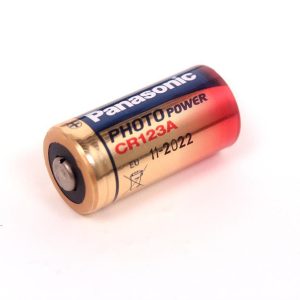
  • Batteries: Always carry a spare set. While modern alarms have “Low Battery” alerts, the cold night air can significantly drain power, and you don’t want to be “blind” during the most productive hours of the session.


Frequently Asked Questions (FAQs)

Q: Why do some alarms have 2.5mm sockets on the bottom?

A: This is a “Power Out” socket. It allows you to plug in illuminated hangers or swingers. When the alarm is triggered, it sends power to the indicator, making it light up simultaneously with the alarm head—perfect for night fishing.

Q: How do I stop my alarms from “bleeping” in the wind?

A: This is where Sensitivity Control is vital. By increasing the amount of line movement required to trigger a beep (or by adjusting the “vibration response”), you can filter out the movement caused by wind or waves while still being alerted to a genuine fish take.


Q: Are all bite alarms waterproof?

A: While most reputable brands like Fox, Delkim, and Nash are highly weather-resistant, they are not “submersible.” High-end models feature “fully encapsulated” electronics (where the circuit board is sealed in resin) which offers the best protection against the damp British climate.

Q: What is a “Drop-Back” tone?

A: This is a specific sound (often a lower pitch or a “see-saw” tone) that tells you the fish has picked up the bait and is swimming towards you. Without this, you might think it’s just a liner, but a drop-back tone signals that you need to wind in the slack quickly to set the hook.

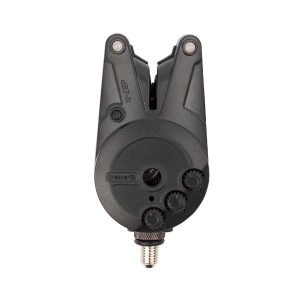
  • Trakker DB7-R Bite Alarm

    Trakker DB7-R Bite Alarm

    £94.99
  • Nash Siren R3/S5R Receiver Batteries

    Nash Siren R3/S5R Receiver Batteries

    £5.49
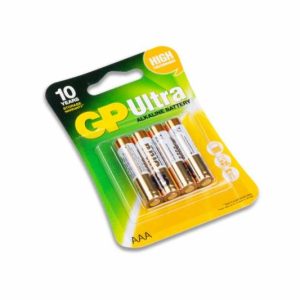
  • GP Ultra Alkaline Battery AAA for Siren R4

    GP Ultra Alkaline Battery AAA for Siren R4

    £3.29
  • Nash Siren R2 Receiver

    Nash Siren R2 Receiver

    £79.99

Bite Alarms & Accessories: Precision Indication for the Modern Angler

In the pursuit of specimen fish, especially during long nights or multi-rod sessions, a reliable Bite Alarm system is your most vital point of contact with the underwater world. A modern alarm does more than just make a sound; it filters out false movements from wind or flow, distinguishes between a “run” and a “drop-back,” and transmits that information instantly to a wireless receiver in your bivvy. At Gerry’s Fishing, we curate a collection of the world’s most advanced indication technology—from the legendary vibration-sensing Delkims to the ultra-reliable roller-wheel systems from Fox and Nash.


Choosing the right alarm is about balancing sensitivity with reliability. Whether you are fishing a small estate lake or a massive continental reservoir, our range of alarms and accessories ensures you never miss a moment of the action.


Technical Specifications & Indication Technology

Bite alarms generally fall into two categories of detection: Roller Wheel and Vibration Sensing. Understanding these is key to selecting the right tool for your specific environment.

Feature Roller Wheel Alarms (e.g., Fox MX) Vibration Sensing (e.g., Delkim v2) Entry-Level Wireless (e.g., Sonik)
Detection Method Magnets on a rotating roller wheel Piezo-vibration (no moving parts) Standard Magnet Roller
Sensitivity Levels 2 – 8 Graduated Settings Digital “Response” Control 4 – 6 Fixed Settings
LED Options Multi-colour (Switchable) Multi-colour (v2 Models) Fixed or 4-Colour Sets
Wireless Range 200m – 500m Up to 750m (Digital) 100m – 150m
Battery Type 2x AAA or AA 9V (PP3) Square 2x AAA or 9V
Best For General use, rivers, & wind Extreme sensitivity & snag fishing Beginners & budget-conscious

Pro Tip: The “Vibration vs. Roller” Edge

When fishing “locked up” against snags where you cannot give an inch of line, vibration sensing alarms (like the Delkim Txi-D v2) offer a significant advantage. Because they don’t require the line to physically move a roller wheel to trigger, they can detect the tiny vibrations of a fish picking up the bait and moving its head before it even begins to pull the line. Conversely, on high-flow rivers, a roller wheel alarm with the sensitivity dialed down is often better, as it won’t be triggered by the constant “thrum” of the current against the line.


Applications: Where to Use Your Alarm Setup

  • Large Reservoir & Continental Sessions: For massive waters like Chew Valley or the great lakes of France, a high-range system like the Nash Siren R4 is essential. Its “Homecoming Mode” (a rear-facing LED) guides you back to your swim by boat in the dark, while the 750m+ receiver range ensures you stay connected even in dense foliage.


  • Commercial Carp Fishing: A mid-range set like the Fox Micron MX or Fox Mini Micron X is perfect. These offer switchable LED colours (Red, Orange, Green, Blue, Purple, White) so you can match your bobbins or simply change the look of your setup on a whim.


  • The Mobile Specialist: If you are roaming or fishing short sessions, look for a compact system like the Prologic BAT+ or the Sonik Herox. These provide reliable indication in a smaller footprint, making them easy to pack into a small carryall or rucksack.


Essential Accessories for Your Setup

  • Snag Ears: Critical for “side-on” takes. These vertical bars (often carbon or stainless) prevent your rod from being pulled off the alarm by a powerful fish.

  • Indicators (Bobbins & Swingers): These provide visual indication and “tension” to the line. Mechanical swingers are best for windy conditions and long-range fishing, while lightweight bobbins are ideal for slack-line fishing at short range.

  • Sounder Boxes & Receivers: Ensure your receiver is kept in a dedicated “silicone skin” or hard case to protect it from the condensation and dampness typical of life in a bivvy.

  • Batteries: Always carry a spare set. While modern alarms have “Low Battery” alerts, the cold night air can significantly drain power, and you don’t want to be “blind” during the most productive hours of the session.


Frequently Asked Questions (FAQs)

Q: Why do some alarms have 2.5mm sockets on the bottom?

A: This is a “Power Out” socket. It allows you to plug in illuminated hangers or swingers. When the alarm is triggered, it sends power to the indicator, making it light up simultaneously with the alarm head—perfect for night fishing.

Q: How do I stop my alarms from “bleeping” in the wind?

A: This is where Sensitivity Control is vital. By increasing the amount of line movement required to trigger a beep (or by adjusting the “vibration response”), you can filter out the movement caused by wind or waves while still being alerted to a genuine fish take.


Q: Are all bite alarms waterproof?

A: While most reputable brands like Fox, Delkim, and Nash are highly weather-resistant, they are not “submersible.” High-end models feature “fully encapsulated” electronics (where the circuit board is sealed in resin) which offers the best protection against the damp British climate.

Q: What is a “Drop-Back” tone?

A: This is a specific sound (often a lower pitch or a “see-saw” tone) that tells you the fish has picked up the bait and is swimming towards you. Without this, you might think it’s just a liner, but a drop-back tone signals that you need to wind in the slack quickly to set the hook.
Original Product

100% Original product that covered warranty by the vendor.

30 Days Warranty

You have the right to return your orders within 30 days.

Global Shipping

Your orders are shipped seamlessly between countries.

100% Secure

Your payments are secure with our private security network.