

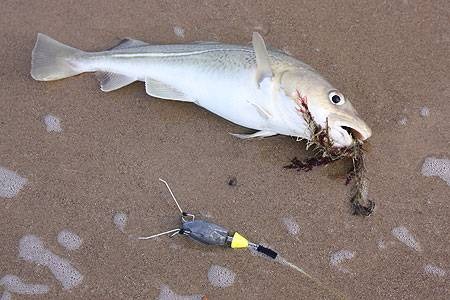
Winter Gold: The Ultimate Guide to UK Shore Cod Fishing
For the dedicated UK sea angler, winter doesn’t mean hibernation—it means one thing: Cod.
When the temperature drops and the northeasterly winds churn the sea into a chocolate-brown swell, the “winter pigs” move inshore to feed. But catching them consistently requires more than just chucking a worm into the wash. It requires venue knowledge, specific bait craft, and a tackle box stocked with components capable of withstanding heavy tides and rough ground.
Here is your complete guide to landing winter cod from the shore.
📍 Top UK Venues for Winter Cod
Success starts with location. Cod rove in specific areas where the tide runs hard and the food is plentiful.
1. Dungeness, Kent
The Mark: The Point and “The Dustbin.”
Why it works: Dungeness is a deep-water shingle venue. The unique tide rips here churn up food constantly. It is arguably the most famous cod venue in the south.
Top Tip: Fish the ebb tide at the Point, but be warned—the tide run is fierce. You will need grip leads (6oz+) to hold the bottom.
2. Chesil Beach, Dorset
The Mark: Abbotsbury and Dragon’s Teeth.
Why it works: This steep shingle bank offers deep water close in. After a heavy storm, the cod move right to the bottom of the shelf to mop up dislodged shellfish.
Top Tip: Distance often counts here. If the fish aren’t in the close gutter, you need to hit the horizon.
3. The Bristol Channel
The Marks: Battery Point (Portishead) and Ladye Bay.
Why it works: The silty, fast-flowing water of the Severn Estuary provides perfect cover for cod to hunt in shallow water.
Top Tip: These are rough ground venues. Tackle losses can be high, so use “rotten bottom” weak links on your leads.
4. The North East Coast (Whitby & Holderness)
The Mark: The rock edges north of Whitby or the boulder clay beaches of Holderness.
Why it works: This is kelp and boulder territory. The cod live here. It is often a case of fishing into the “rough stuff” at low water or casting over it at high.
Top Tip: A heavy sea is essential here. If it’s flat calm, the cod will likely stay offshore.
🛠 The Gear Room: Essential Terminal Tackle
Cod fishing puts immense strain on your gear. You are casting 6oz of lead plus a large bait, often into snaggy ground. Weak components will result in lost fish. Below are the specific components required to build reliable cod rigs.
1. The Hook: Sakuma Manta Extra
When targetting cod, you need a wide-gape hook that won’t bend under pressure. The Sakuma Manta Extra is widely regarded as the industry standard for big fish.
Product Description: The Sakuma Manta Extra is a heavy-duty pattern featuring a super-sharp chemically etched point and a forged shank for immense strength. It is designed with a wide gape to accommodate bulky baits like squid and crab without masking the hook point, ensuring a positive hook-up in the corner of the fish’s mouth.
Specifications:
Material: High carbon steel with a black nickel finish for corrosion resistance.
Size Range: Available from size 1 up to 6/0 (Recommend 4/0 or 5/0 for Cod pennel rigs).
Eye: Small neat eye, suitable for threading bait.
Uses: Heavy shore fishing, rough ground, targeting specimen Cod, Rays, and Hounds.
2. The Rig Body: Sunset Amnesia
For your rig body and snoods, you cannot use standard monofilament; it tangles too easily in the surf. You need “memory-free” line.
Product Description: Sunset Amnesia is a unique memory-free shooting line and leader material. Unlike standard mono, it has virtually zero memory, meaning it stays perfectly straight after being uncoiled. If it does kink, a simple stretch straightens it out immediately. This rigidity helps keep hook lengths away from the main body line in turbulent water.
Specifications:
Breaking Strains: Popular in 15lb, 20lb, 30lb, 40lb, and 60lb. (Use 60lb for the rig body, 30lb-40lb for the hook snood).
Spool Size: 100m spools.
Colors: Clear (for daytime/clear water), Black (for night), Red.
Uses: Rig bodies, snoods, and shock leaders.
3. The Impact Shield: Breakaway Impact Shield
To streamline your bait for distance, you need a mechanism that locks the hook behind the lead during the cast but releases it upon impact with the water.
Product Description: The Breakaway Impact Shield is a neat, aerodynamic component that serves as both a bait clip and a lead piling aid. It allows the angler to clip the baited hook directly behind the sinker, creating a streamlined package. The shield design protects the bait from the force of hitting the water, while the automatic release mechanism ejects the hook the moment the lead hits the sea surface.
Specifications:
Mechanism: Pressure-activated release paddle.
Compatibility: Fits standard wire-tail sinkers or can be used on the rig body with a stop knot.
Pack Size: Usually sold in packs of 10.
Uses: Essential for clipped-down rigs (distance casting).
4. The Shockleader: Sufix Leader
Safety is paramount. When power casting 6oz leads, you need a shockleader that can absorb the immense kinetic energy.
Product Description: Sufix Shock Leader is a premium grade nylon specifically designed to absorb the shock of power casting. It offers high abrasion resistance, which is critical when dragging fish over shingle shelves or rock ledges. It has a consistent diameter and ties excellent, compact knots (such as the Albright knot).
Specifications:
Color: Misty Grey or Fluorescent Yellow (for visibility).
Breaking Strain: Recommend 60lb to 80lb for heavy winter work.
Coating: Fluorine coating for increased durability and water repellency.
Uses: Connecting the mainline to the rig to prevent snap-offs during the cast.
🪱 The Bait Menu: Selection & Prep
Cod are greedy, scent-led hunters, but they can be surprisingly selective.
1. Black & Blow Lugworm
When to pick: The universal cod bait. Use it as your base for almost any session.
Presentation: Thread them up the hook shank to create a solid body.
Pro Tip: “Gutting” Black Lug. If you are freezing down black lug, snip the head off and squeeze the guts out before freezing. This leaves a tough, rubbery skin that stays on the hook during a power cast and resists crabs.
2. Squid
When to pick: When crabs are stripping soft worm baits in minutes, or when you need a bulky bait to target larger fish.
Presentation: Use whole small squid (calamari) or strips of large dirty squid.
Pro Tip: Don’t wash your squid in fresh water; it ruins the scent. Keep it unwashed and “stinky.”
3. The “Cocktail” Advantage
Don’t limit yourself to one bait. The Lug/Squid Cocktail is the gold standard.
Thread 2-3 lugworms onto the hook.
Tip the hook point with a strip of squid or a whole small squid head.
The worm provides the potent scent; the squid keeps the worm from sliding down and masking the hook point.
🎣 Rigging Up: Presentation Matters
For winter cod, you generally need two types of rigs using the components listed in the Gear Room above.
The Pulley Pennel Rig (The Rough Ground King)
This is the number one rig for big cod.
How it works: It uses a “pulley” bead mechanism. When a fish takes the bait and you retrieve, the weight of the fish pulls the lead weight up towards the swivel, keeping it high in the water and away from snags.
The “Pennel”: This means using two Sakuma Manta Extra hooks on one snood (a top hook and a bottom hook).
Why: A big cod bait (like a whole squid) is too big for one hook. The top hook holds the top of the bait, and the bottom hook sits in the tail. This ensures you hook the fish even if it nibbles the end.
The Clipped-Down Rig (The Distance King)
If the fish are at 100+ yards, a flapping bait will act like a parachute, killing your cast distance. You need a rig where the hook clips behind the lead weight.
Mechanism: The hook is placed onto the Breakaway Impact Shield attached near the lead.
Result: The bait flies behind the lead in a single aerodynamic unit.
🚀 Extreme Distance: The “Sausage” Technique
When the cod are feeding at extreme range (150 yards+), simply using a heavy lead isn’t enough. Your bait needs to be as aerodynamic as a bullet. Here is how to construct a long-range cod bait:
1. The Bait Needle is Essential Never try to thread soft worms onto a hook by hand for distance casting. Slide your worms and squid onto a hollow brass baiting needle first. This keeps them straight.
2. The “Sausage” Bind Once the bait is on the needle:
Take your bait elastic (fine or medium).
Whip the elastic tightly around the bait while it is still on the needle.
Compress the bait until it is a firm, straight cylinder—like a sausage.
Crucial: Ensure there are no loose legs or flaps of squid hanging off. These cause drag.
3. Transfer and Clip
Place the hook point into the hollow end of the needle and slide the “sausage” down onto the hook.
Because you bound it before hooking, it will not bunch up at the bend of the hook.
Attach this to your rig and clip it onto the Breakaway Impact Shield. The bait should now sit perfectly in line with the lead weight, hiding in the “slipstream” of the lead during flight.
Summary Checklist for Success
Tide: Fish the hours of darkness, ideally 2 hours before and after high water.
Sea State: Look for “colour” (murky water) and a swell.
Rig Body: 60lb Sunset Amnesia to prevent tangles.
Hooks: 4/0 Sakuma Manta Extras (Pennel style).
Bait: Big, smelly cocktails whipped tight with elastic.