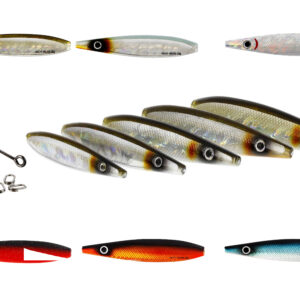
Sea Fishing Lures & Accessories: The Ultimate Collection
Welcome to the ultimate destination for sea fishing lures and accessories. Whether you are an experienced saltwater angler looking to upgrade your tackle box or a beginner taking your first steps into the thrilling world of saltwater lure fishing, this comprehensive category offers everything you need to succeed. Sea fishing with artificial lures is one of the most dynamic, exciting, and highly effective methods for targeting the UK and Europe’s premier saltwater predatory species.
Our carefully curated selection covers every aspect of modern lure fishing. We stock high-performance hard baits, incredibly lifelike soft plastics, long-casting metal jigs, surface poppers, diving minnows, and all the essential terminal tackle, clips, and trace materials required to optimize your setup. Saltwater environments are unforgiving, demanding lures built with robust, corrosion-resistant hardware, through-wire construction, and durable finishes capable of withstanding the crushing jaws of predatory fish and the abrasive nature of rocky coastlines.
Below, you will find an extensive buying guide detailing everything from targeting specific species like bass and pollack from both shore and boat, to understanding the exact specifications, product details, and optimal uses for various lure types.
The Complete Sea Fishing Lure Buying Guide
Selecting the correct lure is about understanding the environment you are fishing in and the specific feeding habits of your target species. Predatory fish such as European seabass (Dicentrarchus labrax) and pollack (Pollachius pollachius) hunt in entirely different ways depending on the depth of the water, the clarity, the tide, and the available baitfish. This guide breaks down exactly what you need in your tackle box to maximize your catch rate.
Targeting Bass
The European seabass is arguably the most sought-after saltwater sport fish in our waters. They are aggressive, intelligent, and ambush predators that utilize currents, structure, and white water to hunt their prey.
1. Bass from the Shore
Shore fishing for bass requires versatility. You might find yourself casting into shallow estuaries, over rough rocky kelp beds, or directly into pounding surf.
Topwater Lures (Surface Spooks and Poppers) When bass are actively pushing baitfish (like sandeels or sprats) to the surface, particularly during dawn, dusk, or over shallow reefs on a flooding tide, topwater lures are devastatingly effective.
-
Product Details & Uses: These lures are designed to create a disturbance on the surface. Walk-the-dog style stickbaits glide side-to-side, mimicking a wounded baitfish, while poppers displace water to create a loud ‘bloop’ that calls fish up from the depths. Ideal for calm to moderate surface conditions and shallow water (1 to 5 feet) where diving lures would snag on weed or rocks.
-
Ideal Specifications: * Length: 90mm – 130mm
-
Weight: 12g – 25g (allowing for long casts while maintaining buoyancy)
-
Action: Floating / Surface Walking / Popping
-
Hooks: Saltwater-grade treble hooks (Size #4 or #6)
Shallow Diving Minnows For sub-surface action over mixed ground, a shallow diving hard plastic lure is a staple.
-
Product Details & Uses: These feature a small plastic lip (bib) at the front. When retrieved, water pressure forces the lure to dive just below the surface and impart a tight wobbling or rolling action. They are used extensively over shallow rocky marks and sandy gullies where bass patrol.
-
Ideal Specifications: * Length: 110mm – 140mm
Weedless Soft Plastics When fishing heavily weeded areas, estuaries, or rocky snags, exposed hooks will instantly foul.
-
Product Details & Uses: Weedless soft plastics feature a soft, flexible body (often a paddle tail or pintail) rigged on a specialized offset hook. The point of the hook rests flush against or slightly inside the plastic back of the lure. When a fish bites, the soft body compresses, exposing the hook point. Used for bumping along the bottom or swimming slowly through dense kelp.
-
Ideal Specifications: * Length: 100mm – 150mm
-
Weight: 10g – 20g (usually achieved via a weighted belly hook or cone weight)
-
Action: Sinking / Tail Thumping
-
Material: Tear-resistant elastomer.
2. Bass from the Boat
Boat fishing for bass opens up access to offshore sandbanks, deep tidal races, and offshore wrecks. The depth and current speed change the required tackle significantly.
Deep Diving Hard Baits When trolling or casting over deeper sandbanks where bass are holding near the bottom.
-
Product Details & Uses: Featuring an elongated, oversized diving lip, these lures rapidly dive to depths of 3 to 6 meters. They are primarily used for trolling behind a moving boat or casting and cranking down deep to target fish that are refusing to rise to the surface.
-
Ideal Specifications: * Length: 120mm – 160mm
Heavy Soft Plastic Shads In strong tidal races, getting a lure down to the strike zone quickly is essential.
-
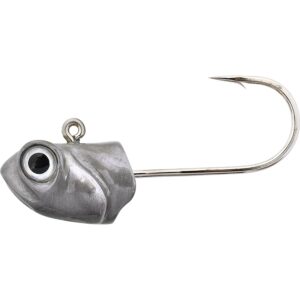
Product Details & Uses: A heavy jig head paired with a large paddle-tail soft plastic body. The heavy lead head cuts through the tidal flow, while the large paddle tail displaces a massive amount of water, sending strong vibrations that bass can detect in deep, turbulent water. Used with a “sink and draw” or straight retrieve method close to the seabed.
-
Ideal Specifications: * Length: 120mm – 180mm
Targeting Pollack
Pollack are renowned for their incredible initial diving runs. They are heavily structure-oriented, meaning you will find them around deep rock faces, kelp forests, drop-offs, and offshore wrecks.
1. Pollack from the Shore
Shore anglers targeting pollack generally seek out deep water accessible from rock marks, cliffs, and piers.
Metal Spinners and Spoons A traditional but highly effective method for casting immense distances from the shore.
-
Product Details & Uses: Constructed from solid brass, steel, or lead alloy, these dense lures cast like a bullet, even into gale-force winds. They possess a fluttering action on the drop and a highly reflective flash on the retrieve. Excellent for covering a vast amount of water and searching for feeding pollack in mid-water.
-
Ideal Specifications: * Length: 60mm – 100mm
-
Weight: 28g – 60g
-
Action: Fast Sinking / Fluttering
-
Finish: Holographic silver, gold, or blue/silver.
Jelly Worms and Sandeel Imitations Pollack feed heavily on sandeels and small baitfish hiding in the kelp.
-
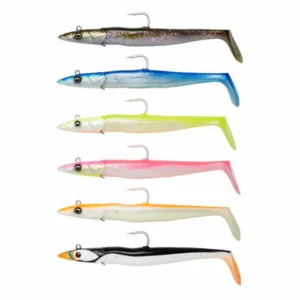
Product Details & Uses: Long, slender soft plastics designed to perfectly mimic a fleeing sandeel. Rigged on a standard jig head or a weedless hook, these lures are cast out, allowed to sink to the kelp canopy, and retrieved with a slow, steady wind. The slender tail provides a subtle, mesmerizing wriggle that pollack cannot resist.
-
Ideal Specifications: * Length: 150mm – 200mm (6 to 8 inches)
-
Weight: 15g – 30g jig head
-
Action: Slow Sinking / Subtle swimming action
-
Colors: Rhubarb & Custard, Motor-oil, Black/Red.
2. Pollack from the Boat
When targeting pollack from a boat, anglers are usually drifting over deep-water wrecks or offshore reefs in depths ranging from 60 to 200 feet.
Artificial Sandeels on a Flying Collar Rig This is the deadliest method for wreck pollack.
-
Product Details & Uses: The lure itself is a high-quality soft plastic sandeel, but the magic is in the rig. A heavy lead weight (often a lead slider on a boom) takes the rig to the bottom. Attached to the boom is a long, clear monofilament trace (10 to 15 feet long) with the unweighted or lightly weighted sandeel lure at the end. The angler drops the rig to the wreck, then retrieves it very slowly, counting the turns of the reel handle (e.g., 20 turns up), before dropping it back down. The lure swims naturally in the tide high above the lead weight.
-
Ideal Specifications: * Lure Length: 150mm – 250mm
Pirks and Slow Pitch Jigs For aggressive vertical fishing directly over structure.
-
Product Details & Uses: Heavy, solid metal lures designed for vertical jigging. The angler drops the lure to the seabed and uses aggressive lifts of the rod to dart the lure upward, followed by a slack-line drop where the lure flutters downward like a dying baitfish. Slow pitch jigs fall horizontally, creating maximum flash.
-
Ideal Specifications: * Length: 100mm – 200mm
Understanding Lure Types and Water Column Management
Success in sea lure fishing heavily relies on fishing the correct depth. Using the wrong lure type for the depth profile means you will either be snagging the bottom continuously or fishing entirely outside of the predator’s strike zone.
Shallow Lures (Sub-Surface and Wake Baits)
When fishing over shallow rocky reefs, weed beds, or calm estuaries where the water depth is less than 3 feet.
Suspended Lures (Suspending Jerkbaits)
A deadly tactic when fish are following a lure but hesitant to strike.
-
Product Details & Uses: Suspending lures are precisely weighted so that their density matches the surrounding saltwater. When you pause your retrieve, the lure neither floats to the surface nor sinks to the bottom; it hovers motionless in the water column. A ‘twitch, twitch, pause’ retrieve is utilized. Most strikes occur during the pause, as the sudden stop triggers a predatory reflex from pursuing bass or sea trout.
-
Specifications:
-
Buoyancy: Suspending (neutral density in saltwater).
-
Internal Hardware: Tungsten or steel weights to balance the lure perfectly horizontally.
-
Uses: Cold water conditions or highly pressured fish that require a slower presentation.
Lures for Fishing in the Surf
Surf fishing introduces unique challenges: strong onshore winds, heavy wave action, and the need for extreme casting distance to reach the deeper troughs behind the breakers.
-
Product Details & Uses: Surf lures need to be highly aerodynamic and dense. Long-cast minnows with internal sliding weights (which shift to the tail during the cast for stable flight, then move to the belly for swimming balance) are essential. Heavy metal casting jigs are also highly relevant here. The lures must “grip” the water so they are not washed ashore by breaking waves, allowing the angler to maintain tension and feel the swimming action.
-
Specifications:
-
Profile: Slim and aerodynamic.
-
Internal Mechanics: Spring-loaded or magnetic weight transfer systems.
-
Weight: 20g to 35g to punch through wind.
-
Action: Tight rolling action that remains stable in turbulent whitewater.
Soft Plastic Swimbaits and Paddle Tails
The most versatile lure category for the modern sea angler.
-
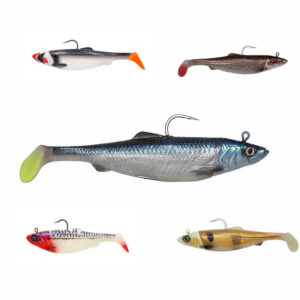
Product Details & Uses: Featuring a soft, fleshy texture that fish hold onto longer, increasing hook-up ratios. The paddle tail catches the water on the retrieve, causing the tail to kick rapidly and the body to roll, emitting low-frequency vibrations. They can be rigged on light jig heads for mid-water swimming or heavy football jigs for dragging across the sandy bottom.
-
Specifications:
-
Material: Pthalate-free soft PVC or advanced stretchy elastomers.
-
Scent: Often impregnated with aniseed, shrimp, or garlic scent trails.
-
Rigging: Compatible with standard jig heads, articulated weedless hook setups, or Texas rigs.
Crucial Elements of a Sea Fishing Lure Setup
Pairing your lures with the right setup ensures you get the most out of your gear.
-
Rods: A fast-action spinning rod ranging from 8ft to 9ft 6in is standard for shore bass fishing, casting weights between 10g and 40g. For boat pollack, a much shorter, stiffer boat rod (12lb to 20lb class) is required to handle the heavy leads and vertical lifting of large fish from structure.
-
Lines: Braided mainlines are absolutely mandatory for modern lure fishing. Braid has zero stretch, providing ultimate sensitivity so you can feel the lure working, detect the slightest taps from fish, and set the hook instantly. An 8-strand braid in 15lb to 20lb breaking strain is ideal for shore work.
-
Leaders: Because braid is highly visible and has poor abrasion resistance against rocks, a fluorocarbon leader is required. Fluorocarbon is nearly invisible underwater and highly abrasion-resistant. A 3-foot to 6-foot length of 15lb to 20lb fluorocarbon joined to the braid via an FG knot or Albright knot is standard.
-
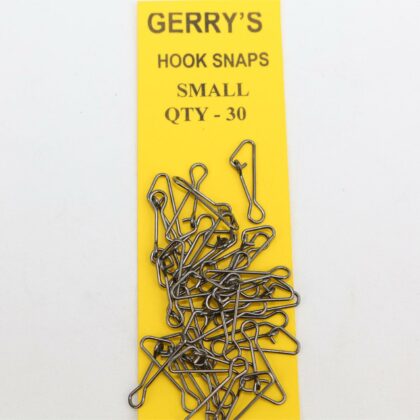
Clips: Avoid tying your leader directly to the lure. Using a high-quality saltwater lure clip allows you to change lures in seconds without shortening your leader, and the rounded profile of the clip gives the lure maximum freedom to move and articulate in the water.
Frequently Asked Questions (FAQ)
Q: What is the best all-around sea fishing lure? A: If you had to choose just one lure type, a soft plastic paddle-tail swimbait ranging between 100mm and 120mm rigged on a 15g to 20g jig head is incredibly versatile. It catches bass, pollack, wrasse, and mackerel. It can be fished fast near the surface, slow-rolled in mid-water, or bounced along the seabed, making it effective from both shore and boat.
Q: Do I need to use a wire trace when sea lure fishing? A: In UK waters, generally no. The primary targets (bass, pollack, mackerel, wrasse) do not have teeth sharp enough to cut through heavy monofilament or fluorocarbon. A good quality 20lb fluorocarbon leader is more than sufficient. Wire traces are bulky, inhibit the natural swimming action of the lure, and are highly visible, which will drastically reduce your catch rate.
Q: What colour lure is best for murky water or night fishing? A: In heavily colored or murky water, fish rely more on their lateral line (which detects vibration) rather than sight. Lures with a heavy vibration (like a large paddle tail or a wide-wobbling crankbait) are essential. Colour-wise, stark contrasting colours work best. Solid black is excellent for night fishing as it casts the best silhouette against the moonlight above. In murky daytime water, bright chartreuse, neon pink, or solid white offer the highest visibility.
Q: How fast should I retrieve my lure for bass? A: Retrieve speed should vary depending on the lure, the water temperature, and the mood of the fish. Generally, a medium-paced retrieve with intermittent twitches of the rod tip to mimic an injured baitfish works best for bass. However, in very cold water, a painfully slow retrieve with a soft plastic bumped along the bottom is often necessary. Always experiment—if a steady retrieve isn’t working, try a “stop and go” technique.
Q: What is a weight transfer system in a lure? A: Many premium hard plastic lures feature an internal hollow chamber containing steel or tungsten ball bearings. During the casting motion, centrifugal force pushes the bearings to the rear of the lure, shifting the center of gravity to the tail. This prevents the lure from tumbling in the air and allows it to cut through strong coastal winds like a dart. Once the lure hits the water and you begin your retrieve, the bearings roll forward into a magnetic chamber in the belly, balancing the lure perfectly for swimming.
Q: What tide is best for lure fishing from the shore? A: While every mark is different, the majority of shore lure anglers prefer a flooding tide (the period from low water pushing up to high water). As the tide pushes in, it floods previously dry ground, washing crabs, worms, and small baitfish out of their hiding spots. Predatory fish like bass naturally ride this incoming tide into the shallows to hunt. The two hours before high tide and the hour immediately after high tide are traditionally considered the peak feeding windows.
Q: How do I maintain my saltwater lures? A: Saltwater is highly corrosive. To ensure your lures and their hooks last, you must rinse them in lukewarm freshwater after every single trip. Allow them to dry fully before putting them back in a sealed tackle box. If you notice treble hooks beginning to rust, replace them immediately with high-quality saltwater-grade replacements to ensure you don’t lose the fish of a lifetime to a snapped hook