

At Gerry’s Fishing, the expert team understands that the hook is the single most vital link between the angler and a successful catch. In the challenging, high-stress environment of saltwater fishing, failure of terminal tackle is often linked to compromised or under-spec hooks, particularly when using popular hard baits and spinners. Our extensive collection of sea fishing lure hooks is meticulously curated to replace and upgrade standard factory equipment, ensuring maximum strength and unparalleled penetration when targeting specimen fish.
This category provides a comprehensive range of chemically sharpened, heavy-duty saltwater hooks, including highly sought-after single inline designs and robust treble patterns from globally recognized brands. Whether the objective is enhancing lure action, improving catch-and-release safety, or achieving superior strength on powerful species, selecting the appropriate pattern and material is crucial for confidence on the water. The universal experience of serious anglers is that the hook supplied with a lure is often its weakest point, making the selection of replacement and upgrade hooks the most critical decision in securing a trophy catch.
For many years, the treble hook was the undisputed standard for rigging hard plugs and spinners, offering three points of contact to maximize the probability of an initial hook-up. However, for the committed sea angler, especially those targeting larger, stronger species like bass, pollock, or cod, the modern trend is a widespread conversion to single inline hooks. This choice represents a strategic decision that prioritizes long-term fish retention, tackle longevity, and conservation over the traditional metric of initial strike success.
In open sea environments where fish are typically larger and the fight is often intense, the single hook offers a distinct advantage in performance and safety. When a fish strikes a lure equipped with a single hook, the entirety of the pressure exerted by the angler’s strike is concentrated into that one point. This focus facilitates deeper, more reliable penetration and a more solid hook hold, resulting in significantly fewer lost fish compared to a treble hook under maximum load.14 While treble hooks may boast a higher initial hookup rate, the focused strength and secure penetration of the single inline hook translate into a higher overall catch rate, meaning more quality fish landed successfully.
The advantages extend beyond pure strength. Single hooks are inherently safer for both the angler and the fish. With only one point to contend with, they are significantly easier and faster to remove, which is paramount for successful catch-and-release (C&R) efforts. They are also far less prone to snagging on floating grass, kelp, or submerged structure like rocks and walls, allowing anglers to fish tighter to key features and prolonging the life of expensive lures by preventing loss. Furthermore, because the hook point faces away from the lure body, the hook is less likely to dull itself by repeatedly contacting the flank of the lure, thereby protecting both the sharpness of the point and the finish of the lure itself.
Despite the rise of singles, saltwater treble hooks remain necessary for certain lures and techniques, particularly in ensuring rapid hook-up on quick-biting fish or when using lures where the original design requires three points to maintain optimal balance. The key requirement for sea fishing, however, is strength. Standard treble hooks often lack the required durability, necessitating an immediate upgrade to robust, X-Strong wire configurations.
When selecting treble hooks, anglers must look for classifications such as 4X Strong or 5X Strong hooks, forged from high-carbon steel, designed to withstand the violent headshakes and strong runs of powerful predatory species. These heavy-duty hooks are essential for targeting larger cod, bass, or pollock. Examples of high-quality, heavy-gauge treble patterns include the reliable VMC 9626 O’Shaughnessy Treble Hook, specifically designed for its thick gauge and reliable performance, or the Mustad UltraPoint KVD Elite Triple Grip, recognized as a highly engineered upgrade solution. For large plugs, treble sizes often start at size 2, while smaller spinners aimed at species like mackerel may utilize size 4 or 6. Prioritizing reputable brands such as Mustad, Owner, and VMC ensures that these crucial triple-point connections maintain their integrity under extreme pressure.
The transition from trebles to inline singles requires careful consideration to ensure the replacement hook maintains the lure’s action and balance. Inline single hooks are purpose-built for saltwater lure applications, often featuring a larger eyelet than standard single hooks to allow for superior freedom of movement and a wider gape crucial for better engagement in the fish’s mouth.
The design of the single inline hook greatly benefits conservation efforts. By reducing the number of points and simplifying the geometry, these hooks minimize physical harm and expedite the release process. For sensitive fisheries, or where regulations mandate low-impact tackle, anglers can opt for barbless or micro-barbed hooks, which provide a reliable hold while ensuring minimal trauma and easier removal compared to traditional barbed designs.
Crucially, when replacing a treble with a single hook, the replacement hook must maintain a similar overall length and weight to the original setup; otherwise, the lure’s intended swimming action may be compromised.18 The following technical conversion guide is an essential tool for anglers looking to upgrade their tackle while ensuring optimal performance:
Table: Treble Hook to Single Inline Hook Conversion Guide
| Original Treble Hook Size | Recommended Single Inline Replacement Size |
| #10 | #4, #2 |
| #8 | #2, #1 |
| #6 | #1, 1/0 |
| #4 | 2/0, 3/0 |
| #2 | 3/0, 4/0 |
| #1 | 4/0, 5/0 |
| 1/0 | 5/0, 6/0 |
This guide addresses a key high-intent user query, providing the technical data needed for an expert angler to confidently upgrade the hooks on their plugs and casting lures.
The scope of lure fishing extends far beyond casting spoons and plugs, leading to specialized hook requirements that target dedicated, high-value technical anglers. For vertical presentation techniques, specifically jigging and topwater popping, the strength requirements are extreme, often necessitating hooks rated to 6X Strong wire.
When utilizing metal jigs or casting stickbaits and poppers, anglers frequently employ specialized single hooks designed for extreme force. These heavy-duty single hooks, such as the BKK Lone Diablo Inline Single Hooks or Decoy Castin Single JS-5, are engineered with features like hand-ground durable points and welded eyes to tackle trophy-size sea monsters. The BKK DEEP Jigging single hook, for instance, is an ultra-strong 6X single, purpose-built for tackling powerful bottom-dwelling species.
Furthermore, Assist Hooks are integral to modern jigging. These are pre-rigged systems utilizing ultra-strong Kevlar or PE braided cord, such as the Shout Kudako or BKK Heavy Jigging Assist Hooks. Assist hooks are commonly equipped with luminous thread as an added attractant, especially useful in deep water or cloudy conditions, and are highly regarded for providing high penetration and precise hook sets when fishing technical jigging setups. They can be configured as single or double assist rigs and are designed with strong press rings for direct attachment to solid rings on the lure or jig head, demonstrating their utility for the most demanding applications.
Expert angling requires a deep understanding of hook terminology, as these factors determine performance and suitability for specific species and baits.
The gauge refers to the thickness of the wire used in the hook’s construction. A heavy gauge hook is much stronger and is required for fighting large, powerful fish, such as the thick-gauged O’Shaughnessy or Uptide patterns. Conversely, fine gauge hooks (like the Aberdeen style) are lighter, easier to hide, and offer superior bait presentation, particularly with worm baits. The gape is the distance between the hook point and the shank, and a wider gape is necessary for effectively presenting bulky baits such as whole squid, large plastics, or crab rigs.
The hook sizing system itself is often confusing. Generally, a larger number denotes a smaller hook (e.g., a #10 is smaller than a #2). However, for larger sea fishing hooks, the aught system is used, where the designation is followed by “/0” (e.g., 2/0). In this system, the numbers signify progressively larger hooks (e.g., a 10/0 hook is significantly larger than a 1/0 hook). Appropriately sizing hooks is essential; a 4/0 to 6/0 hook is commonly used for larger baits targeting striped bass or snapper, while 7/0 and above are required for big game fish like sharks or tuna.
The longevity and performance of a sea hook are intrinsically linked to its material composition and finish. High-carbon steel provides superior initial strength and sharpness , but it requires anti-corrosion treatments to survive the corrosive effects of saltwater. Many top-tier hooks utilize specialized anti-corrosive black nickel finishes to protect the metal.
While some hooks are constructed from stainless steel, an excellent material for resisting corrosion, it carries a unique consideration: stainless steel hooks will not quickly rust out of a fish’s mouth if the line breaks and the hook is left behind. This contrasts with high-carbon steel hooks, which will eventually corrode. For this reason, many responsible anglers who prioritize fish welfare choose high-carbon steel with a robust protective coating, ensuring maximum strength during the fight but eventual decay should the hook be lost. This decision involves balancing the need for ultimate strength with environmental and conservation best practices
The ideal hook depends entirely on the lure and the target species. For high-speed spinning lures targeting mackerel or small pollack, a small, sharp treble hook may maximize initial contact. However, for hard plugs and crankbaits aimed at specimen bass or cod, the most robust and secure option is often a heavy-duty, strong single inline hook (rated 3X or 4X strong). Single inline hooks are universally preferred for superior strength when landing a larger fish, reducing snags, and improving angler and fish safety.
The optimal replacement size typically depends on maintaining the lure’s overall weight and length. A good starting guideline, as outlined in the conversion table above, shows that a single hook is usually several sizes larger than the treble it replaces. For example, a size 4 treble hook is commonly replaced by a 2/0 or 3/0 single inline hook to ensure proper hook gap (gape) and penetration without negatively impacting lure action.
Circle hooks are highly effective and widely used in sea fishing, but they are primarily optimized for live or dead bait presentation, not general lure applications. Their design—where the point bends inward toward the shank—is crucial because it prevents deep-hooking, making them the preferred choice for catch-and-release fishing, particularly for UK shark species like tope or Bull Huss. Because they set themselves in the corner of the fish’s mouth without the need for a forceful strike, they are fantastic choices for novice anglers or when fishing passive dead baits, but they are not the standard for actively retrieved hard lures.
Upgrading from factory trebles to high-quality single inline hooks delivers several significant benefits for the serious saltwater angler. Firstly, they provide a much stronger hook hold, focusing all striking pressure onto one point for superior penetration into hard mouths. Secondly, single hooks drastically reduce snagging in heavy cover, saving expensive lures, and are much easier to untangle from landing nets. Finally, they offer superior safety for both the angler (fewer points to get hooked by) and the fish, making the release process much faster and easier.
These terms refer to critical structural elements of a hook. The gauge refers to the thickness of the wire used in the hook’s construction. A heavy gauge hook (high thickness) is much stronger and is required for fighting large, powerful fish. The gape is the distance between the hook point and the shank. A wide gape is essential for rigging bulky or thick baits, ensuring that the hook point remains exposed for effective penetration.
Gerry’s Fishing selects only the most trusted and durable brands in the terminal tackle market. For heavy-duty saltwater applications, the leading manufacturers known for their chemically sharpened points, robust wire gauge, and anti-corrosion treatments include Mustad, Owner, VMC, BKK, and Shout. These brands specialize in high-carbon steel and 4X to 6X strong ratings, providing the necessary assurance of quality for tackling the largest sea predators.
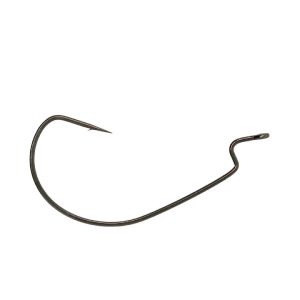
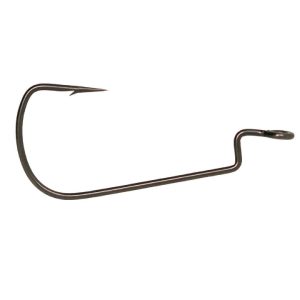
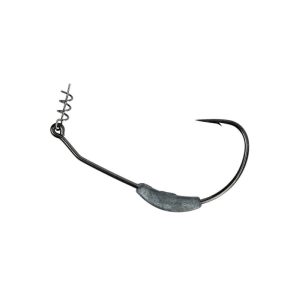

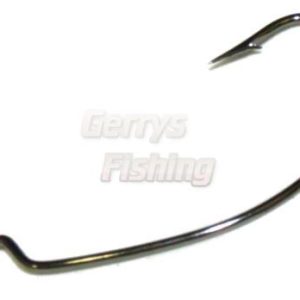
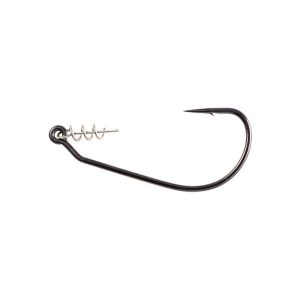
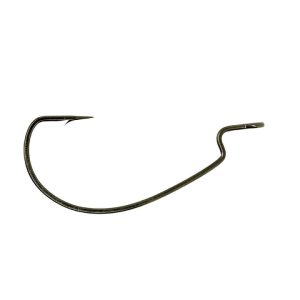
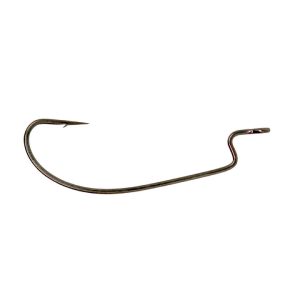
At Gerry’s Fishing, the expert team understands that the hook is the single most vital link between the angler and a successful catch. In the challenging, high-stress environment of saltwater fishing, failure of terminal tackle is often linked to compromised or under-spec hooks, particularly when using popular hard baits and spinners. Our extensive collection of sea fishing lure hooks is meticulously curated to replace and upgrade standard factory equipment, ensuring maximum strength and unparalleled penetration when targeting specimen fish.
This category provides a comprehensive range of chemically sharpened, heavy-duty saltwater hooks, including highly sought-after single inline designs and robust treble patterns from globally recognized brands. Whether the objective is enhancing lure action, improving catch-and-release safety, or achieving superior strength on powerful species, selecting the appropriate pattern and material is crucial for confidence on the water. The universal experience of serious anglers is that the hook supplied with a lure is often its weakest point, making the selection of replacement and upgrade hooks the most critical decision in securing a trophy catch.
For many years, the treble hook was the undisputed standard for rigging hard plugs and spinners, offering three points of contact to maximize the probability of an initial hook-up. However, for the committed sea angler, especially those targeting larger, stronger species like bass, pollock, or cod, the modern trend is a widespread conversion to single inline hooks. This choice represents a strategic decision that prioritizes long-term fish retention, tackle longevity, and conservation over the traditional metric of initial strike success.
In open sea environments where fish are typically larger and the fight is often intense, the single hook offers a distinct advantage in performance and safety. When a fish strikes a lure equipped with a single hook, the entirety of the pressure exerted by the angler’s strike is concentrated into that one point. This focus facilitates deeper, more reliable penetration and a more solid hook hold, resulting in significantly fewer lost fish compared to a treble hook under maximum load.14 While treble hooks may boast a higher initial hookup rate, the focused strength and secure penetration of the single inline hook translate into a higher overall catch rate, meaning more quality fish landed successfully.
The advantages extend beyond pure strength. Single hooks are inherently safer for both the angler and the fish. With only one point to contend with, they are significantly easier and faster to remove, which is paramount for successful catch-and-release (C&R) efforts. They are also far less prone to snagging on floating grass, kelp, or submerged structure like rocks and walls, allowing anglers to fish tighter to key features and prolonging the life of expensive lures by preventing loss. Furthermore, because the hook point faces away from the lure body, the hook is less likely to dull itself by repeatedly contacting the flank of the lure, thereby protecting both the sharpness of the point and the finish of the lure itself.
Despite the rise of singles, saltwater treble hooks remain necessary for certain lures and techniques, particularly in ensuring rapid hook-up on quick-biting fish or when using lures where the original design requires three points to maintain optimal balance. The key requirement for sea fishing, however, is strength. Standard treble hooks often lack the required durability, necessitating an immediate upgrade to robust, X-Strong wire configurations.
When selecting treble hooks, anglers must look for classifications such as 4X Strong or 5X Strong hooks, forged from high-carbon steel, designed to withstand the violent headshakes and strong runs of powerful predatory species. These heavy-duty hooks are essential for targeting larger cod, bass, or pollock. Examples of high-quality, heavy-gauge treble patterns include the reliable VMC 9626 O’Shaughnessy Treble Hook, specifically designed for its thick gauge and reliable performance, or the Mustad UltraPoint KVD Elite Triple Grip, recognized as a highly engineered upgrade solution. For large plugs, treble sizes often start at size 2, while smaller spinners aimed at species like mackerel may utilize size 4 or 6. Prioritizing reputable brands such as Mustad, Owner, and VMC ensures that these crucial triple-point connections maintain their integrity under extreme pressure.
The transition from trebles to inline singles requires careful consideration to ensure the replacement hook maintains the lure’s action and balance. Inline single hooks are purpose-built for saltwater lure applications, often featuring a larger eyelet than standard single hooks to allow for superior freedom of movement and a wider gape crucial for better engagement in the fish’s mouth.
The design of the single inline hook greatly benefits conservation efforts. By reducing the number of points and simplifying the geometry, these hooks minimize physical harm and expedite the release process. For sensitive fisheries, or where regulations mandate low-impact tackle, anglers can opt for barbless or micro-barbed hooks, which provide a reliable hold while ensuring minimal trauma and easier removal compared to traditional barbed designs.
Crucially, when replacing a treble with a single hook, the replacement hook must maintain a similar overall length and weight to the original setup; otherwise, the lure’s intended swimming action may be compromised.18 The following technical conversion guide is an essential tool for anglers looking to upgrade their tackle while ensuring optimal performance:
Table: Treble Hook to Single Inline Hook Conversion Guide
| Original Treble Hook Size | Recommended Single Inline Replacement Size |
| #10 | #4, #2 |
| #8 | #2, #1 |
| #6 | #1, 1/0 |
| #4 | 2/0, 3/0 |
| #2 | 3/0, 4/0 |
| #1 | 4/0, 5/0 |
| 1/0 | 5/0, 6/0 |
This guide addresses a key high-intent user query, providing the technical data needed for an expert angler to confidently upgrade the hooks on their plugs and casting lures.
The scope of lure fishing extends far beyond casting spoons and plugs, leading to specialized hook requirements that target dedicated, high-value technical anglers. For vertical presentation techniques, specifically jigging and topwater popping, the strength requirements are extreme, often necessitating hooks rated to 6X Strong wire.
When utilizing metal jigs or casting stickbaits and poppers, anglers frequently employ specialized single hooks designed for extreme force. These heavy-duty single hooks, such as the BKK Lone Diablo Inline Single Hooks or Decoy Castin Single JS-5, are engineered with features like hand-ground durable points and welded eyes to tackle trophy-size sea monsters. The BKK DEEP Jigging single hook, for instance, is an ultra-strong 6X single, purpose-built for tackling powerful bottom-dwelling species.
Furthermore, Assist Hooks are integral to modern jigging. These are pre-rigged systems utilizing ultra-strong Kevlar or PE braided cord, such as the Shout Kudako or BKK Heavy Jigging Assist Hooks. Assist hooks are commonly equipped with luminous thread as an added attractant, especially useful in deep water or cloudy conditions, and are highly regarded for providing high penetration and precise hook sets when fishing technical jigging setups. They can be configured as single or double assist rigs and are designed with strong press rings for direct attachment to solid rings on the lure or jig head, demonstrating their utility for the most demanding applications.
Expert angling requires a deep understanding of hook terminology, as these factors determine performance and suitability for specific species and baits.
The gauge refers to the thickness of the wire used in the hook’s construction. A heavy gauge hook is much stronger and is required for fighting large, powerful fish, such as the thick-gauged O’Shaughnessy or Uptide patterns. Conversely, fine gauge hooks (like the Aberdeen style) are lighter, easier to hide, and offer superior bait presentation, particularly with worm baits. The gape is the distance between the hook point and the shank, and a wider gape is necessary for effectively presenting bulky baits such as whole squid, large plastics, or crab rigs.
The hook sizing system itself is often confusing. Generally, a larger number denotes a smaller hook (e.g., a #10 is smaller than a #2). However, for larger sea fishing hooks, the aught system is used, where the designation is followed by “/0” (e.g., 2/0). In this system, the numbers signify progressively larger hooks (e.g., a 10/0 hook is significantly larger than a 1/0 hook). Appropriately sizing hooks is essential; a 4/0 to 6/0 hook is commonly used for larger baits targeting striped bass or snapper, while 7/0 and above are required for big game fish like sharks or tuna.
The longevity and performance of a sea hook are intrinsically linked to its material composition and finish. High-carbon steel provides superior initial strength and sharpness , but it requires anti-corrosion treatments to survive the corrosive effects of saltwater. Many top-tier hooks utilize specialized anti-corrosive black nickel finishes to protect the metal.
While some hooks are constructed from stainless steel, an excellent material for resisting corrosion, it carries a unique consideration: stainless steel hooks will not quickly rust out of a fish’s mouth if the line breaks and the hook is left behind. This contrasts with high-carbon steel hooks, which will eventually corrode. For this reason, many responsible anglers who prioritize fish welfare choose high-carbon steel with a robust protective coating, ensuring maximum strength during the fight but eventual decay should the hook be lost. This decision involves balancing the need for ultimate strength with environmental and conservation best practices
The ideal hook depends entirely on the lure and the target species. For high-speed spinning lures targeting mackerel or small pollack, a small, sharp treble hook may maximize initial contact. However, for hard plugs and crankbaits aimed at specimen bass or cod, the most robust and secure option is often a heavy-duty, strong single inline hook (rated 3X or 4X strong). Single inline hooks are universally preferred for superior strength when landing a larger fish, reducing snags, and improving angler and fish safety.
The optimal replacement size typically depends on maintaining the lure’s overall weight and length. A good starting guideline, as outlined in the conversion table above, shows that a single hook is usually several sizes larger than the treble it replaces. For example, a size 4 treble hook is commonly replaced by a 2/0 or 3/0 single inline hook to ensure proper hook gap (gape) and penetration without negatively impacting lure action.
Circle hooks are highly effective and widely used in sea fishing, but they are primarily optimized for live or dead bait presentation, not general lure applications. Their design—where the point bends inward toward the shank—is crucial because it prevents deep-hooking, making them the preferred choice for catch-and-release fishing, particularly for UK shark species like tope or Bull Huss. Because they set themselves in the corner of the fish’s mouth without the need for a forceful strike, they are fantastic choices for novice anglers or when fishing passive dead baits, but they are not the standard for actively retrieved hard lures.
Upgrading from factory trebles to high-quality single inline hooks delivers several significant benefits for the serious saltwater angler. Firstly, they provide a much stronger hook hold, focusing all striking pressure onto one point for superior penetration into hard mouths. Secondly, single hooks drastically reduce snagging in heavy cover, saving expensive lures, and are much easier to untangle from landing nets. Finally, they offer superior safety for both the angler (fewer points to get hooked by) and the fish, making the release process much faster and easier.
These terms refer to critical structural elements of a hook. The gauge refers to the thickness of the wire used in the hook’s construction. A heavy gauge hook (high thickness) is much stronger and is required for fighting large, powerful fish. The gape is the distance between the hook point and the shank. A wide gape is essential for rigging bulky or thick baits, ensuring that the hook point remains exposed for effective penetration.
Gerry’s Fishing selects only the most trusted and durable brands in the terminal tackle market. For heavy-duty saltwater applications, the leading manufacturers known for their chemically sharpened points, robust wire gauge, and anti-corrosion treatments include Mustad, Owner, VMC, BKK, and Shout. These brands specialize in high-carbon steel and 4X to 6X strong ratings, providing the necessary assurance of quality for tackling the largest sea predators.
Your payments are secure with our private security network.
Your orders are shipped seamlessly between countries.
We are happy to take returns for new items for up to 30 days.
Expert advice on all types of fishing situations & tackle.