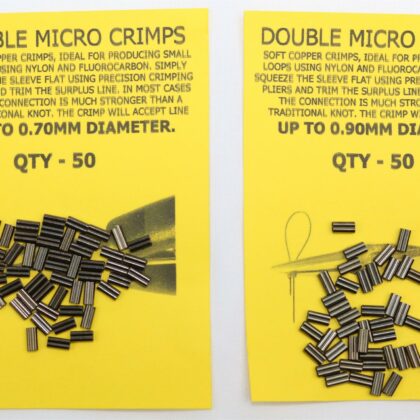
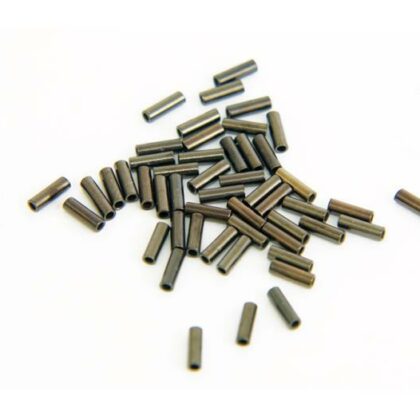
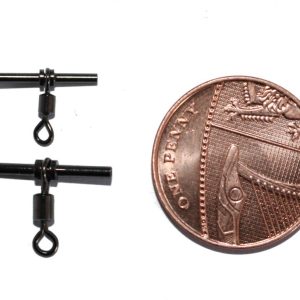
Crimps (also called sleeves or stops) are essential rig‑making components that let you build tidy, reliable rigs without extra knots. Specialist rig crimps come in micro, standard and heavy sizes to match everything from light flapper rigs to heavy wire traces for specimen work; many are made from coated brass or nickel‑plated steel for ease of crimping and saltwater durability.
What we stock and why
We stock mini crimps, standard rig crimps and heavy crimps in multiple internal diameters and lengths so you can match crimps to monofilament, braid or wire traces. Packs range from small trial packs to bulk 100‑packs for regular rig makers. Quality crimps hold firmly with minimal pressure, reducing the risk of damaging the trace and giving a neat, low‑profile finish that casts cleanly and resists snagging.
Choosing the right crimp
Match the crimp’s internal diameter (ID) to your line diameter — crimps that are too large will slip, crimps that are too small can cut the line. For typical 60 lb monofilament (around 0.70–0.80 mm) choose crimps with an ID close to 0.80–0.90 mm; length is a secondary consideration but mini crimps (shorter, low profile) are popular for neat rigs. Use heavier crimps designed for wire or very high breaking strains when building predator traces or wreck rigs.
Rigging and practical tips
Use the correct crimping pliers and press in the centre of the sleeve; over‑crimping or squeezing off‑centre can damage the line and weaken the join.
Trap swivels between beads and crimps to create tidy dropper points for multi‑hook rigs.
Test crimps by pulling the rig under load before you fish — a properly crimped sleeve should hold without slipping.
Consider pre‑made crimped traces if you want consistent strength and speed on the bank; otherwise keep a small selection of crimps and pliers in your rig wallet for repairs.
Care, storage and buying checklist
Buy crimps in the right ID and material for your mainline and hooklengths.
Rinse and dry any crimps that have been exposed to saltwater before storage to prevent corrosion.
Store crimps in labelled packets or small parts boxes so you can find the right size quickly on the bank.
Carry a spare set of pliers and a few pre‑made crimps for quick repairs. These simple steps keep rigs reliable and reduce lost fish and wasted time