Carp Hooks & Patterns: The Foundation of Your Rig
The hook is the most vital component in your terminal tackle. It is the critical point where presentation meets capture. At Gerry’s Fishing, we understand that reliability, strength, and sharpness are non-negotiable. Our comprehensive range of Carp Hooks features chemically sharpened, high-carbon steel patterns from the industry’s elite brands, ensuring you have the confidence to land the biggest fish on the most pressured waters.
Detailed Category Description: Specifications and Rig Uses
Choosing the right hook involves matching the pattern, wire gauge, and size to your chosen rig and bait. Our selection is categorized to help you build the perfect, most efficient setup.
Hook Patterns and Their Ideal Uses
We stock all popular carp hook designs, each engineered for a specific purpose and rig mechanic:
-
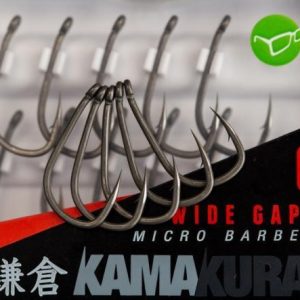
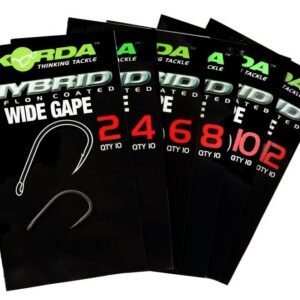
Wide Gape Hooks: Featuring a larger gape (the distance between the point and the shank), these are the perfect all-rounder. They offer exceptional hook hold, particularly when used with bottom baits and wafters on standard hair rigs or blowback rigs.
-
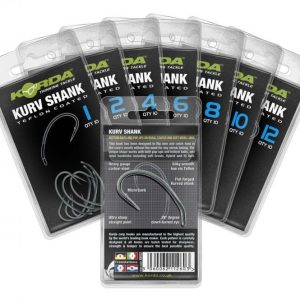
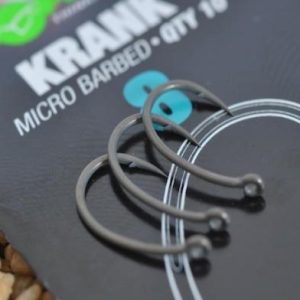
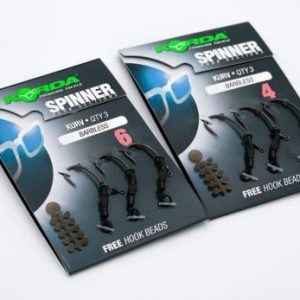
Curve Shank/Krank Hooks: The curved shank forces the hook point to rotate quickly and aggressively. They are deadly on KD Rigs and other simple knotless knot presentations, minimizing the need for shrink tubing or kickers.
-
Chod Hooks (or Stiff Rigger/Claw Hooks): Characterized by an out-turned eye and often a short shank, these hooks are purpose-built for stiff materials. They provide faultless presentation when used on Chod Rigs, Hinge Stiff Rigs, or Multi Rigs, especially over weedy or soft lakebeds.
The Edge in Specifications: Sharpness and Finish
Modern carp hooks offer far more than just basic shape:
-
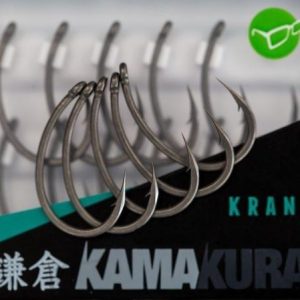
Chemically Sharpened Points: Brands like Korda with their Kamakura range use chemical sharpening processes to produce points that are sharper than standard grinding, guaranteeing easier and deeper penetration on every take.
-
PTFE/Teflon Coating: Many of our hooks feature a non-glare, PTFE coating. This not only camouflages the hook on the lakebed but also provides a slick finish, allowing for faster, less-resisted penetration.
-
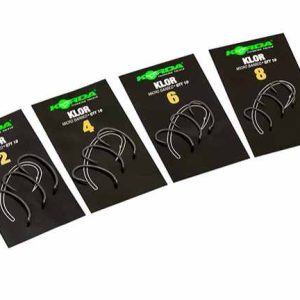
Wire Gauge: We offer hooks in various wire diameters (gauge). Heavy-gauge hooks (e.g., sizes 2–6) are preferred for weedy or snaggy conditions, while medium-gauge hooks (e.g., sizes 8–10) are excellent for finesse presentation with softer hooklinks.
We stock the full range of options including Barbed for maximum security (where permitted) and Barbless hooks, which are often compulsory on commercial fisheries and offer superior fish care. Our top brands include Korda, Nash Pinpoint, Guru, and Fox.
Frequently Asked Questions (FAQs)
Q: Which hook size should I use for carp fishing? A: Hook size must match your bait size. For standard 15mm-18mm boilies, Size 6 or 8 is generally recommended. For small baits, like a single grain of corn or a 10mm pop-up, drop down to a Size 10 or 12. For massive hook baits or fishing in extreme snags, a Size 2 or 4 heavy-gauge hook may be required.
Q: What is the difference between a Straight Eye and an In-Turned Eye? A:
-
In-Turned Eye (often 15° or 20°): This is the most common and versatile type. It helps the hook point orientate towards the bottom lip, promoting solid hook holds, especially when using supple braid.
-
Straight Eye: Best suited for specialist rigs like the Chod Rig and Hinge Stiff Rig, where the hooklink material is stiff and needs the eye to align perfectly with the shank for optimal presentation.
Q: Are chemically sharpened hooks like Korda Kamakura worth the extra cost? A: Yes. The primary cause of lost fish is a dull hook point. Chemically sharpened hooks, such as the Korda Kamakura, are significantly sharper straight from the packet, requiring less effort to set and penetrating harder parts of the mouth more reliably, leading to more secure and successful hook holds.
Q: Should I choose Barbed or Barbless hooks? A: This depends on the venue rules. Barbless hooks are compulsory on most commercial carp waters as they are safer and easier to remove, causing less damage. Barbed hooks offer a more secure hold and are often preferred on large, wild waters where rules permit and fish are few and far between. Always check the fishery rules first.